OpenJev Runs Agent Decisions 5x Faster by Skipping Token Generation
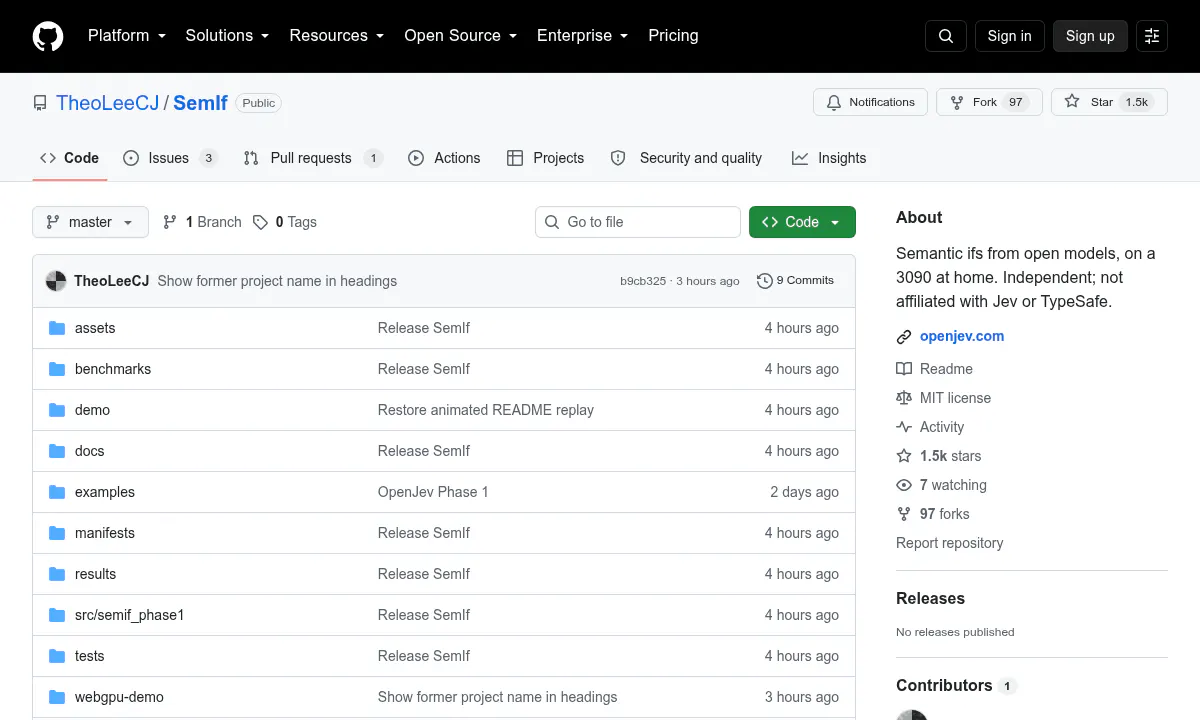
OpenJev reproduces TypeSafe's semantic if-statement service using open 4B models on a single RTX 3090, reading option logits directly instead of parsing generated JSON.
Takeaways
- OpenJev reproduces TypeSafe's Jev decision service using open 4B models on a single RTX 3090
- Reads typed option logits directly in one forward pass, no JSON generation or parsing
- 5.21× faster than a compact generated JSON array on 21 binary decisions
- Parallel prefix reuse hits 20 decisions/second on a 777-decision workload
- Qwen3.5-4B reaches 0.845 agreement with Jev's 0.883 on aligned 102-row subset
- MIT licensed, browser WebGPU demo at openjev.com , repo at TheoLeeCJ/SemIf
OpenJev skips generation to speed up agent decisions
Agent systems routinely make narrow decisions such as routing a ticket, retrying a call, or checking whether evidence supports a claim. A chat model can handle those tasks, but generated prose or JSON adds output tokens and forces the application to parse text back into a boolean or enum. OpenJev uses open 4B models to score typed options directly on a single RTX 3090, eliminating answer generation.
Theo Lee publishes the independent project under the MIT license as a reproduction of the interface pattern exposed by TypeSafe’s closed Jev service. The scope covers Jev’s developer-facing behavior; its undisclosed model and training process remain outside the project. A request supplies unstructured state, a runtime-defined question, and typed options, while the response contains a probability for each option.
One pass, typed probabilities
OpenJev runs a forward pass for each decision and reads the logits assigned to the declared options. It returns the corresponding typed probability scores without sampling an answer token, constructing JSON, or repairing malformed output.
The repository compares direct scoring with autoregressive JSON generation using the same frozen Qwen3.5-4B model, state, 21 binary criteria, and RTX 3090:
| Path | Time | Output tokens | Result |
|---|
Reporting is indexed from AlphaSignal. Rights remain with the original publisher and cited sources.
Read original reportSources
Next reads
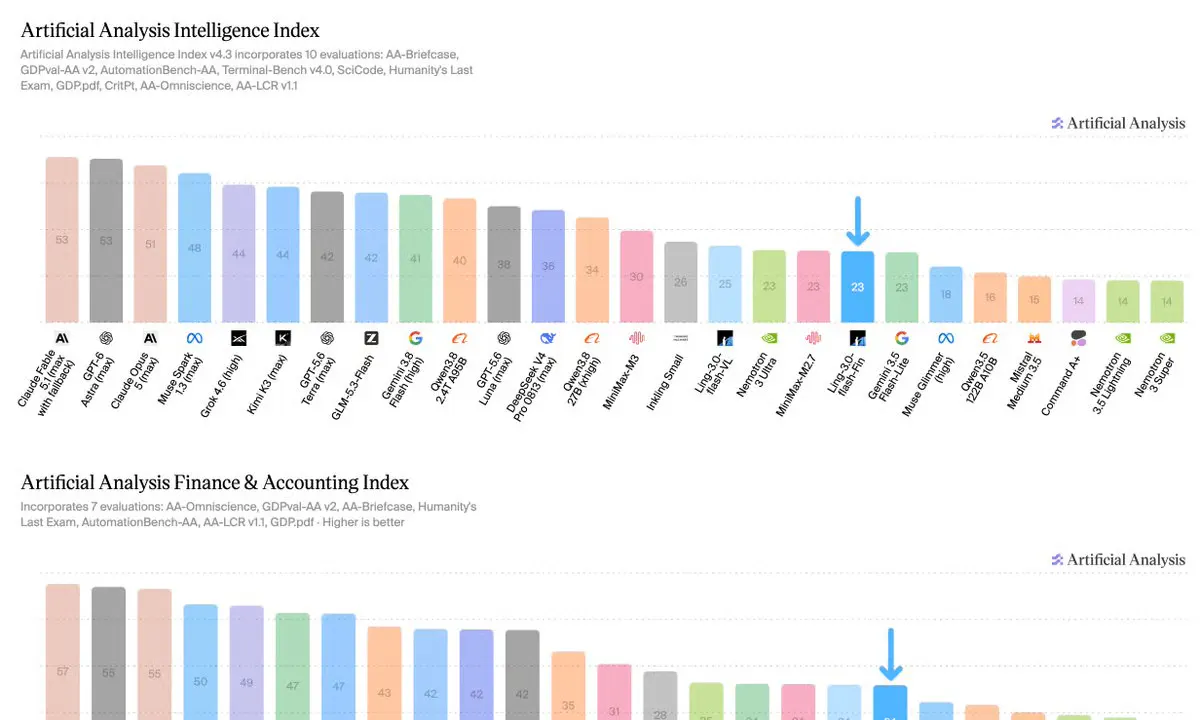
Ant Group Releases Ling-3.0-flash-Fin to Self-Host Financial Research at 124B Parameters
China Telecom Releases Xing4.0, an Open 29B Coding Agent Built on Huawei Chips