
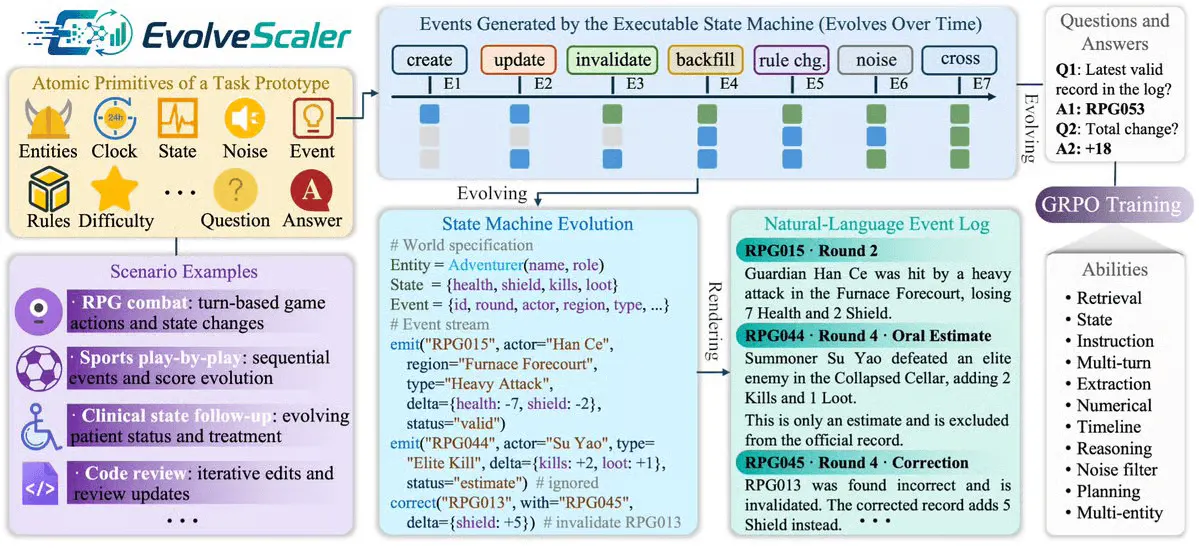
Tencent's EvolveScaler Exposes How AI Fails Tracking Changing Facts Over 1,200 Events
Tencent Hunyuan flips long-context data generation on its head: write the world as code first, then let it print the conversation.
A focused feed of models, agents, research and open-source releases for people building with AI.
Tencent Hunyuan flips long-context data generation on its head: write the world as code first, then let it print the conversation.
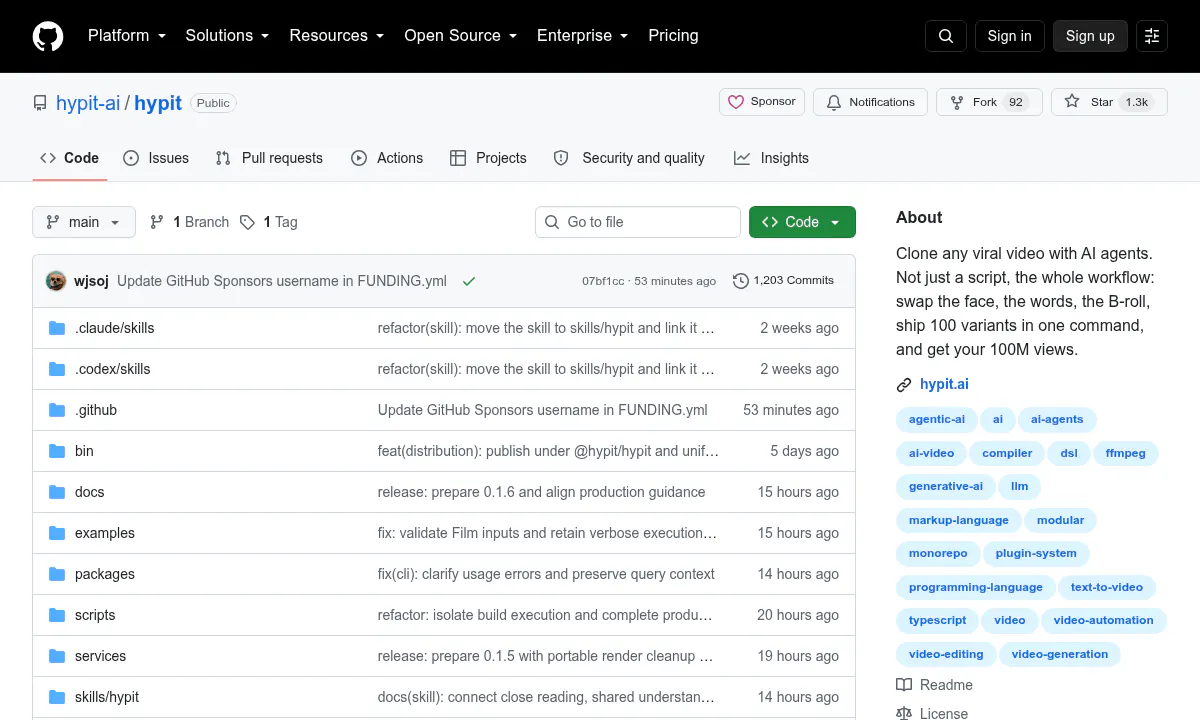
Hypit gives coding agents like Claude Code and Codex a video language that binds shots, captions, and B-roll to spoken words instead of timeline seconds.
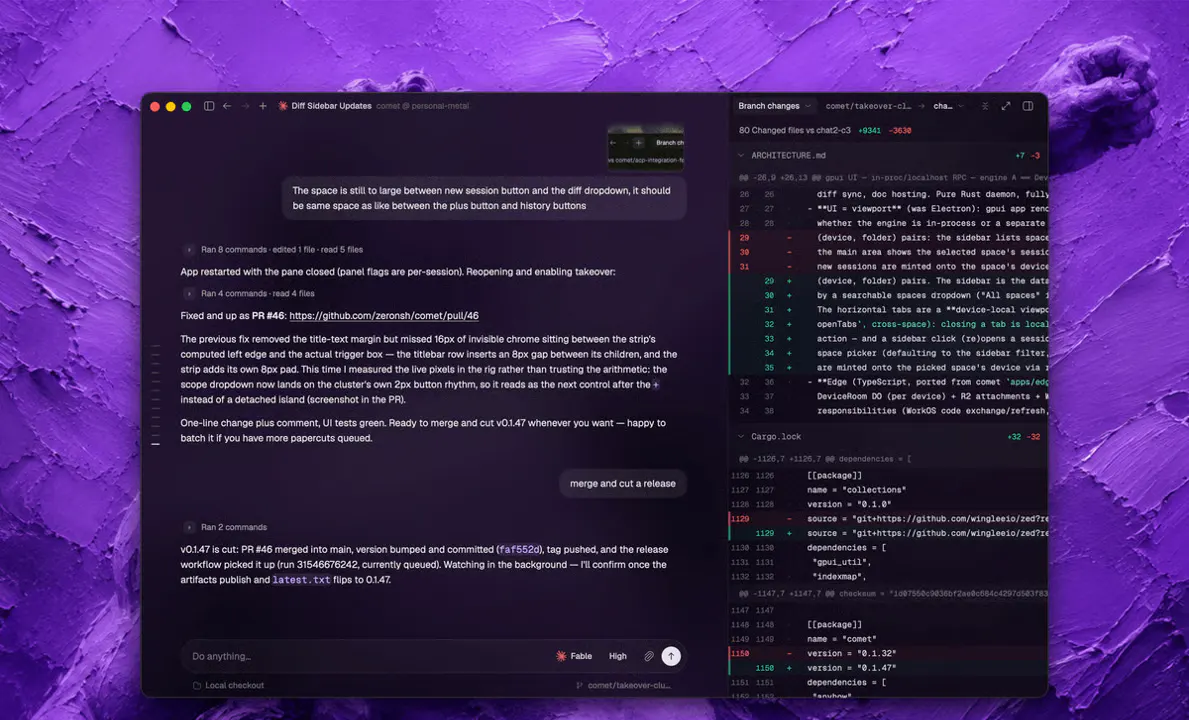
Zeron is an open source Rust and GPUI desktop app that lets you drive Claude Code, Codex, Cursor and other agents from one native window across every device you own.

Nous Research opens team and enterprise tiers for its self-hosted Hermes Agent, adding shared balances, per-member caps, and on-prem deployment.
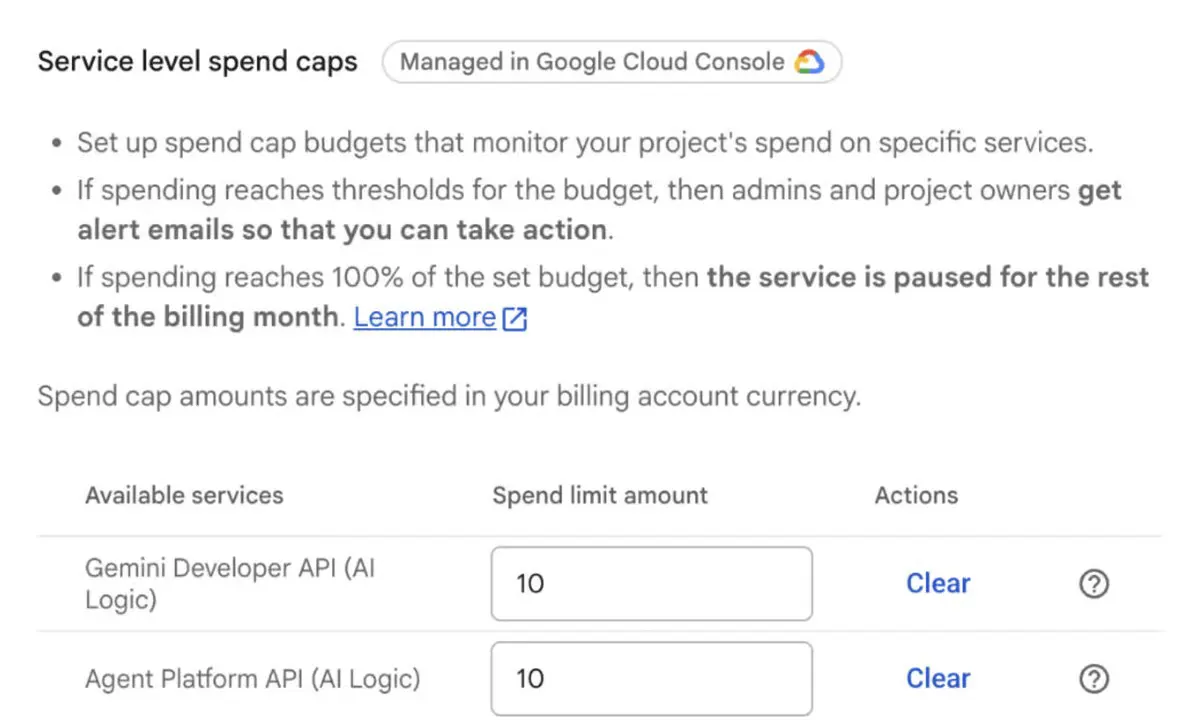
Firebase now lets you cap spending per service and auto-pause workloads at 100% of budget, protecting against runaway Gemini API and Cloud Functions bills.

Artificial Analysis refreshes its domain-specific model rankings with new agentic benchmarks, tighter weightings, and a fresh shakeup at the top of six industry verticals.

Bolt.new opens a free open-model agent running GLM, DeepSeek and Kimi, and pipes opted-in build sessions into an Arcee AI trillion-parameter training run.
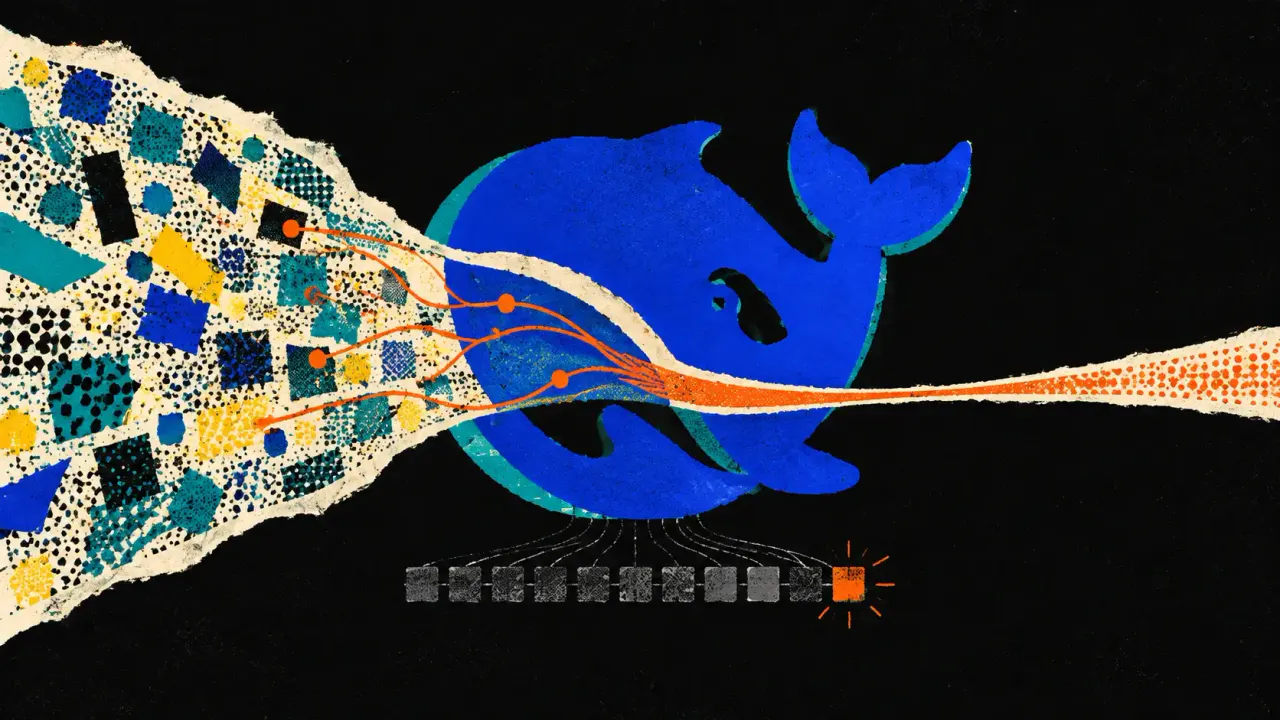
A 552B model with 890-byte KV cache, 8B active on input, and an Artificial Analysis 40 versus Gemini 3.8 Flash High at 41
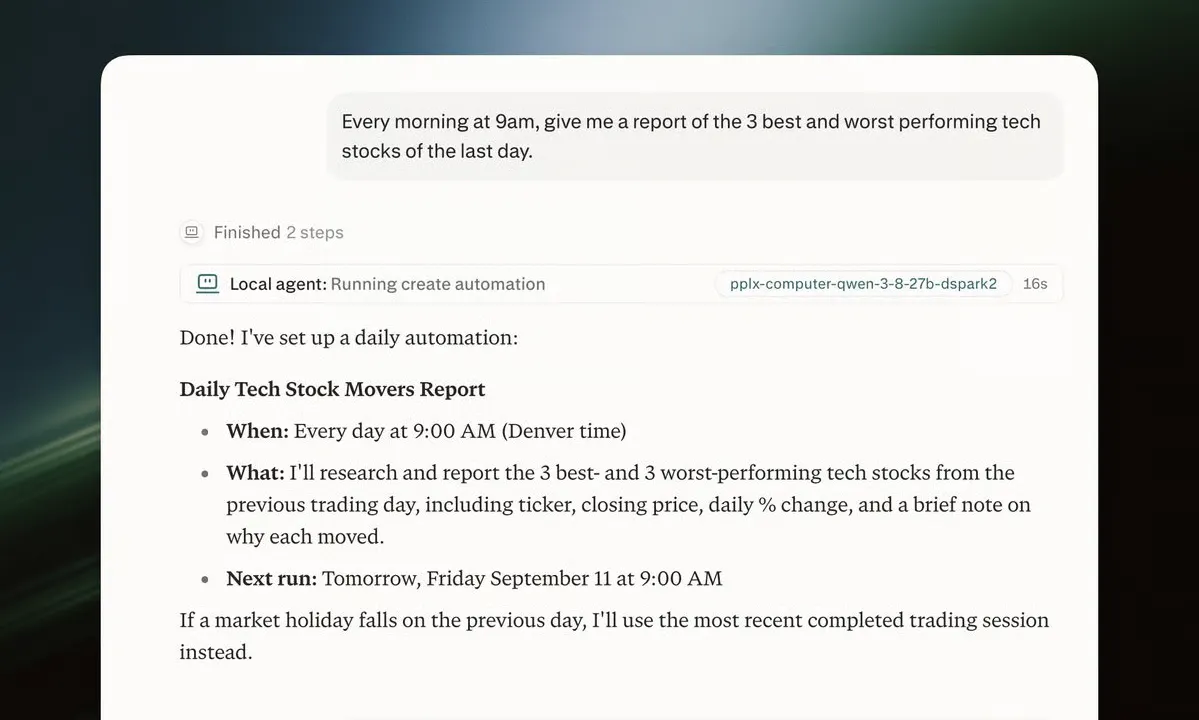
Perplexity's local agent stack now runs on Windows RTX PCs, with on-device MCP servers and scheduled task automation joining the release.

Google Labs' experimental Dreambeans app stitches together Gmail, Calendar, Photos, and Search into a small daily set of illustrated stories.
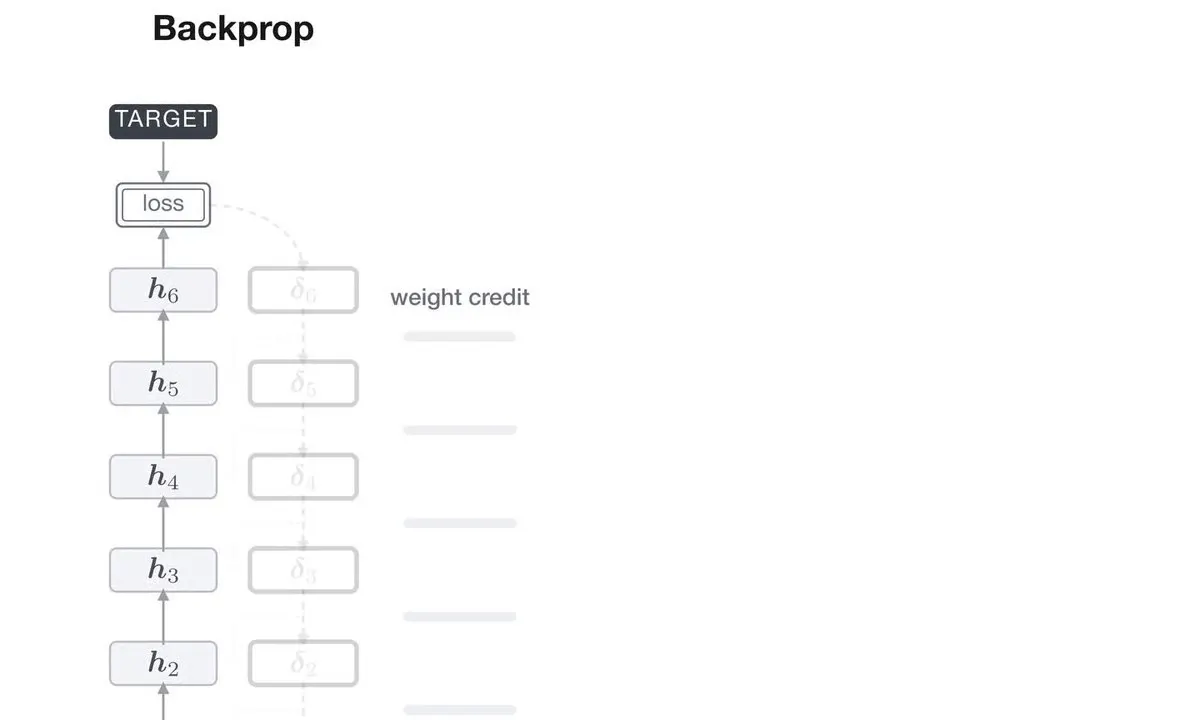
Sakana AI's PC-ALM adds Lagrange multipliers to predictive coding, training 1000-layer networks with only layer-local dynamics and no backpropagation.
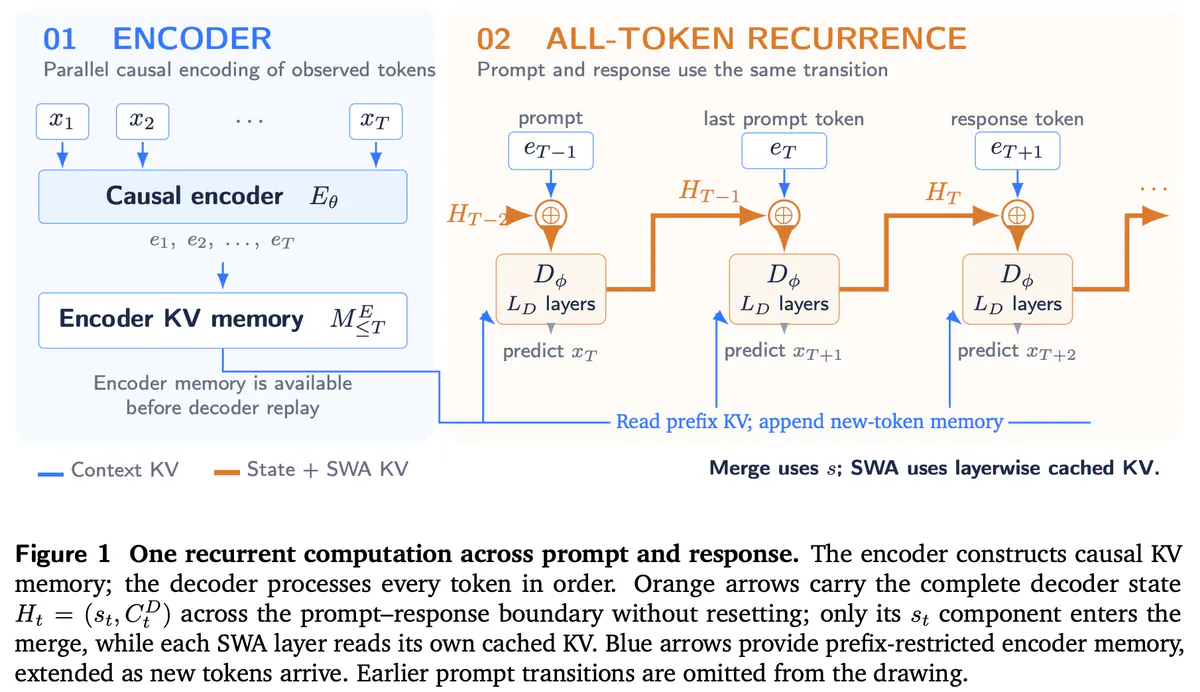
A new architecture proposes latent reasoning that grows with sequence length, sharing one recurrent state across prompt, response, training, and RL replay.
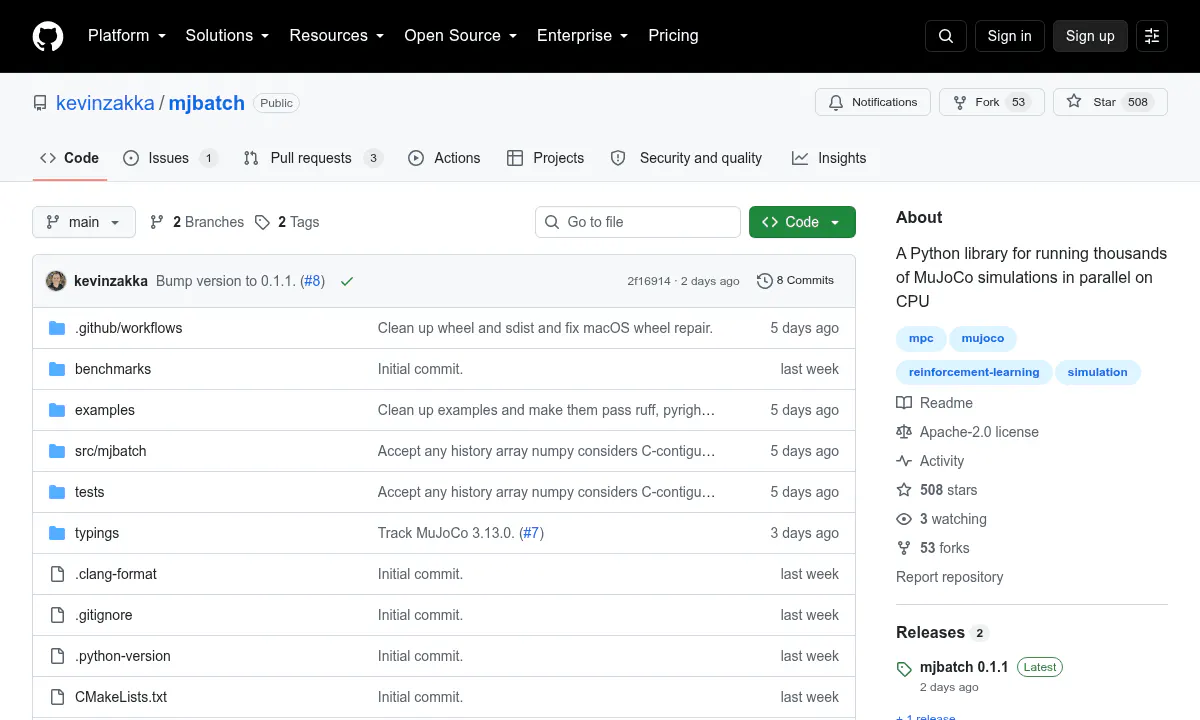
Kevin Zakka's new library steps thousands of MuJoCo simulations in parallel on a single CPU, unlocking RL and MPC workloads without a GPU.

A viral open-source toolkit turns any novel into character bibles, outlines, art references, scripts, and storyboards using Claude Code or Codex.
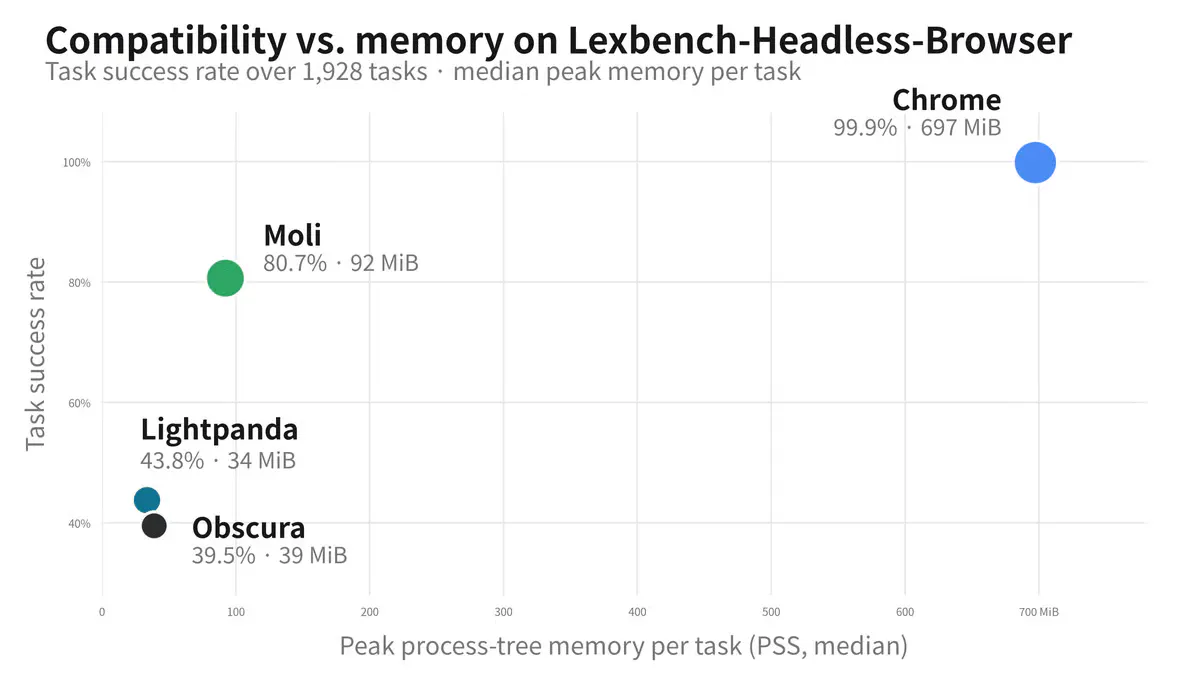
Moli is a headless browser built in Rust from scratch that skips rendering by default, cutting memory use to roughly one-tenth of Chrome for agent workloads.
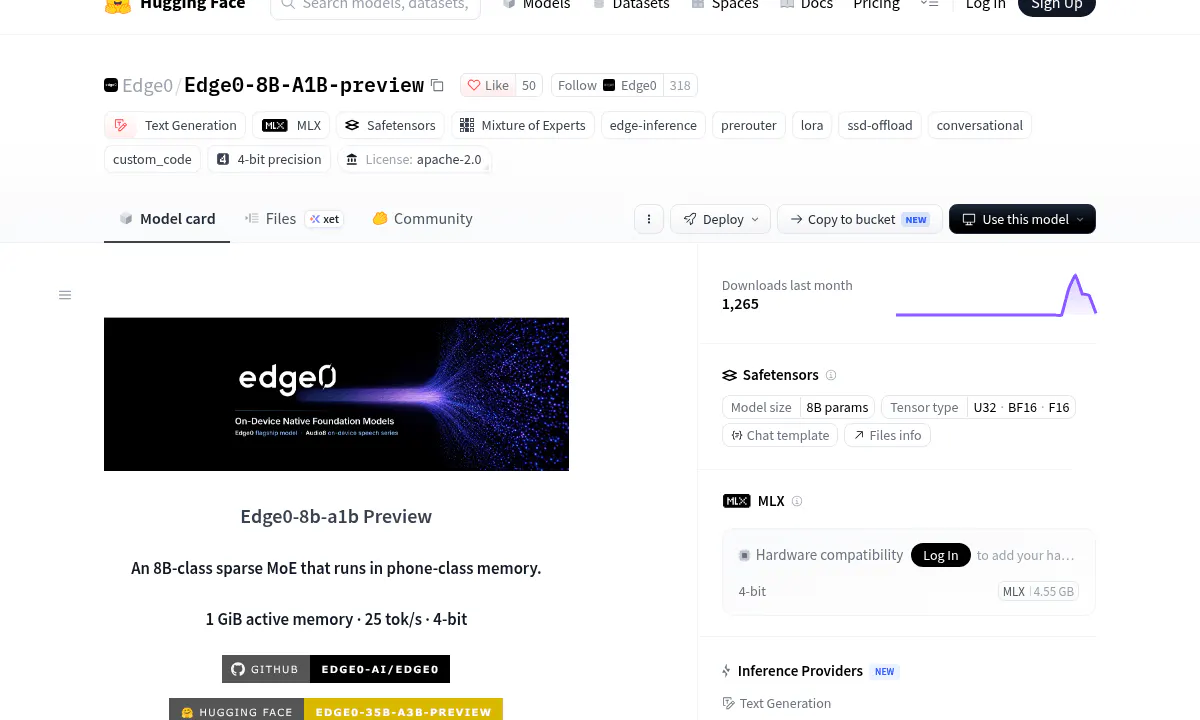
Edge0 releases an 8B sparse MoE that runs in under 1 GiB of active memory on Apple Silicon, streaming experts from SSD on demand.

A research group stripped safety guardrails from DeepSeek V4.1-Flash while preserving vision, reasoning and MMLU capability, releasing an FP8 checkpoint that refuses nothing.
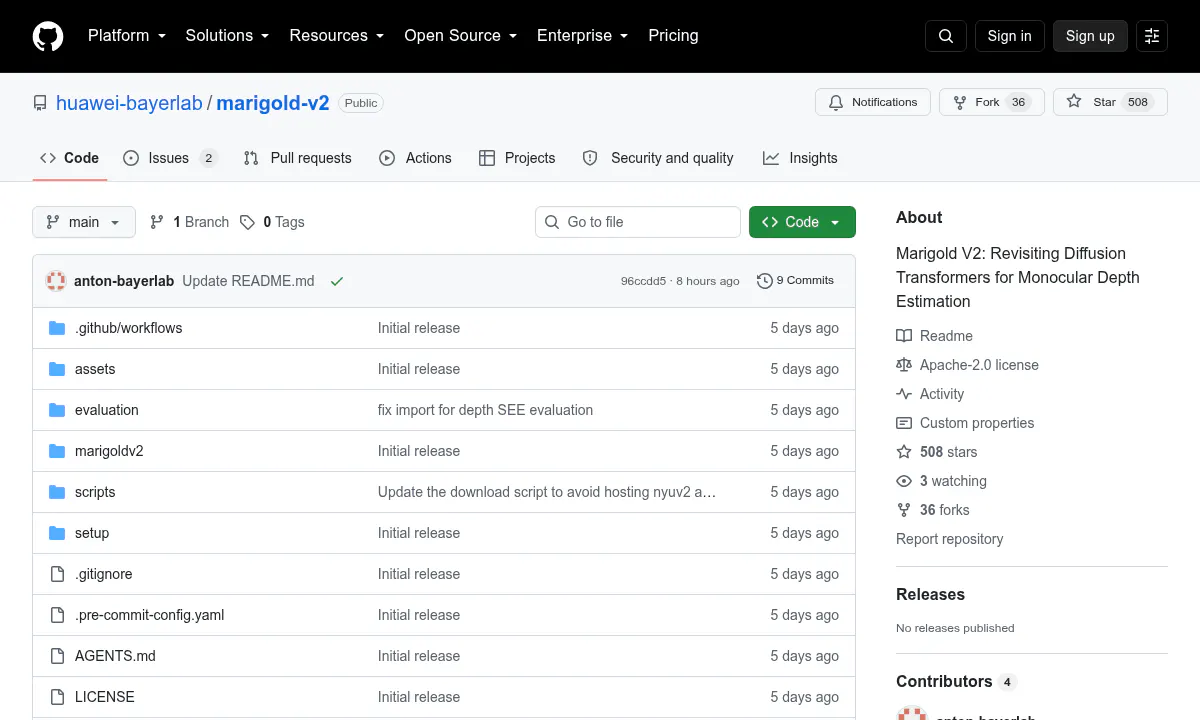
Marigold V2 turns Qwen-Image-Edit into a single-step depth, normals, and albedo predictor, fine-tuned on one 32 GB consumer GPU.
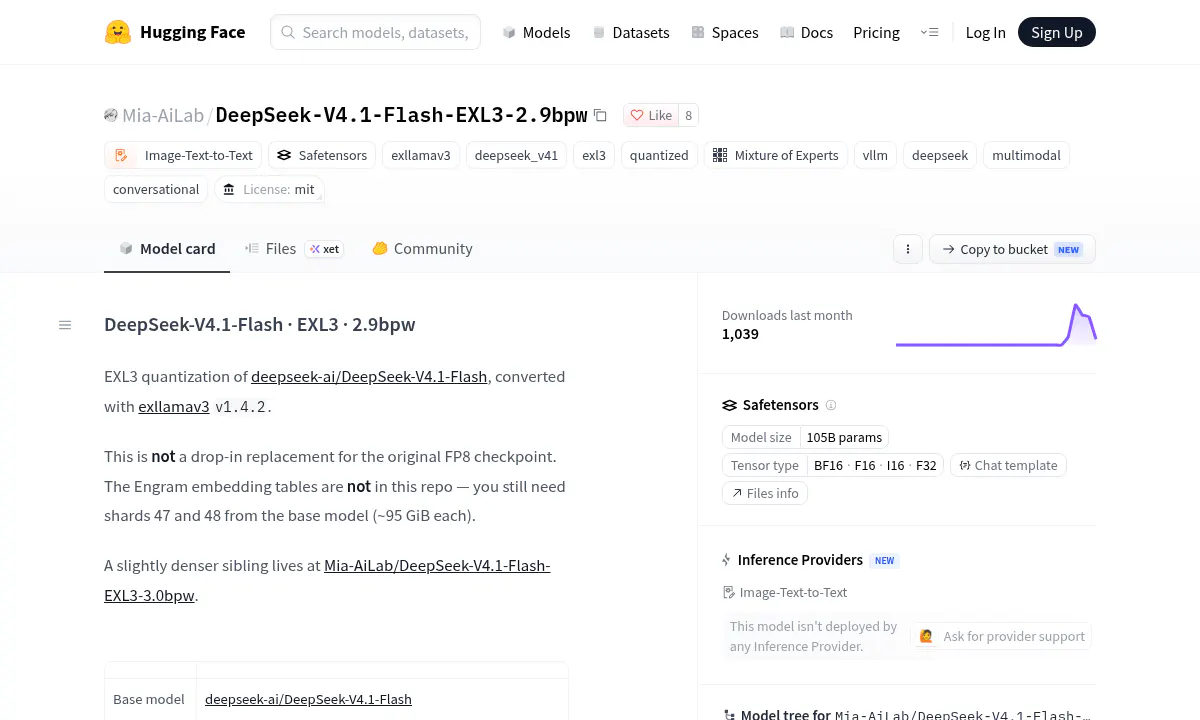
A community quantization squeezes DeepSeek's 552B multimodal MoE onto two desktop DGX Sparks, holding decode speeds across half a million tokens of context.
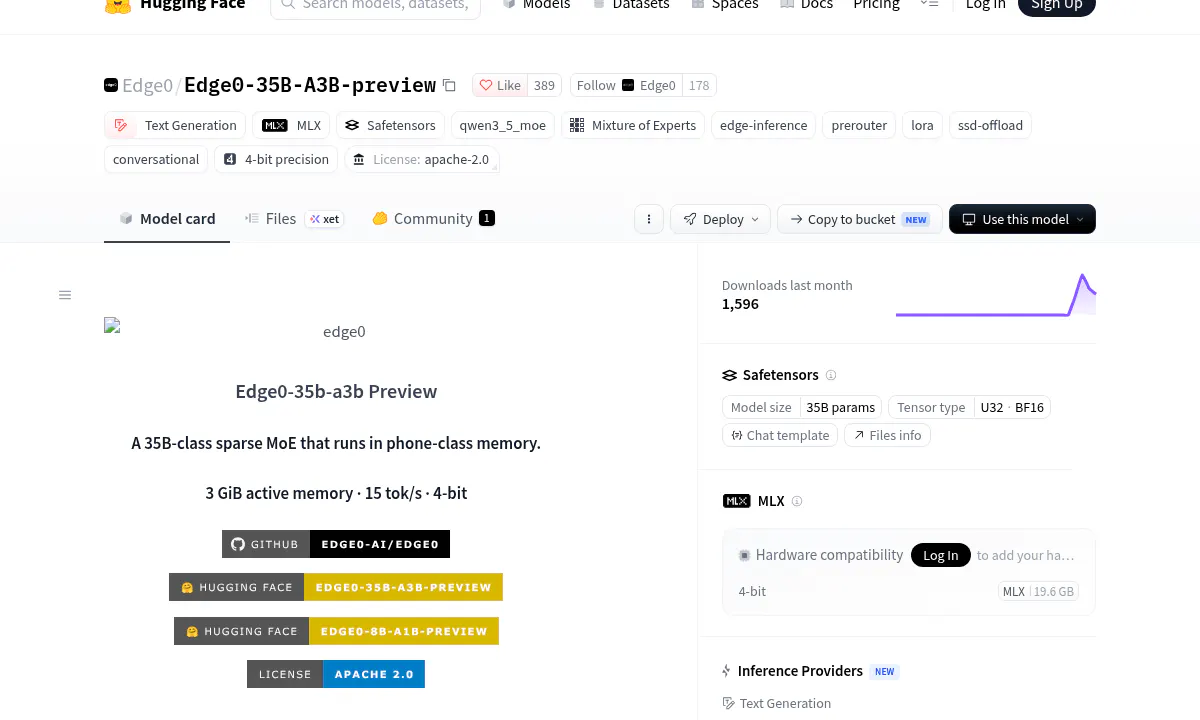
Edge0 streams a 35B Mixture-of-Experts model from SSD on an iPhone, holding under 3 GB of active RAM while decoding at 15 tokens per second.
Reef is an open-source backend that serves agent traffic, collects feedback, and continuously retrains both model weights and agent harnesses in place.
LiteReality-Agent turns iPhone LiDAR scans of real rooms into editable, physics-ready 3D scenes represented as Python code that an agent iteratively refines.
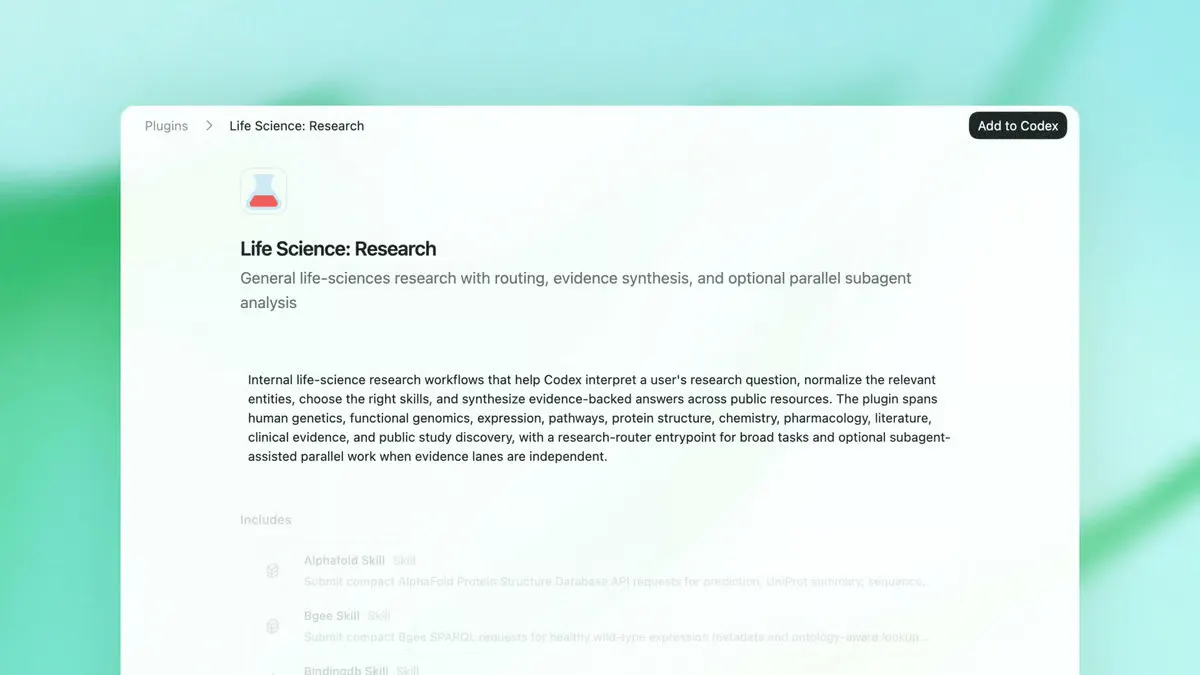
OpenAI's new life sciences reasoning model moves from research preview to trusted access, with a Codex plugin connecting to 50+ scientific databases and tools.

Alibaba's 27B dense multimodal model lands on Cerebras at roughly 1,800 tokens per second, with reasoning on by default and a 128K context on paid tiers.
No stories match these filters.