
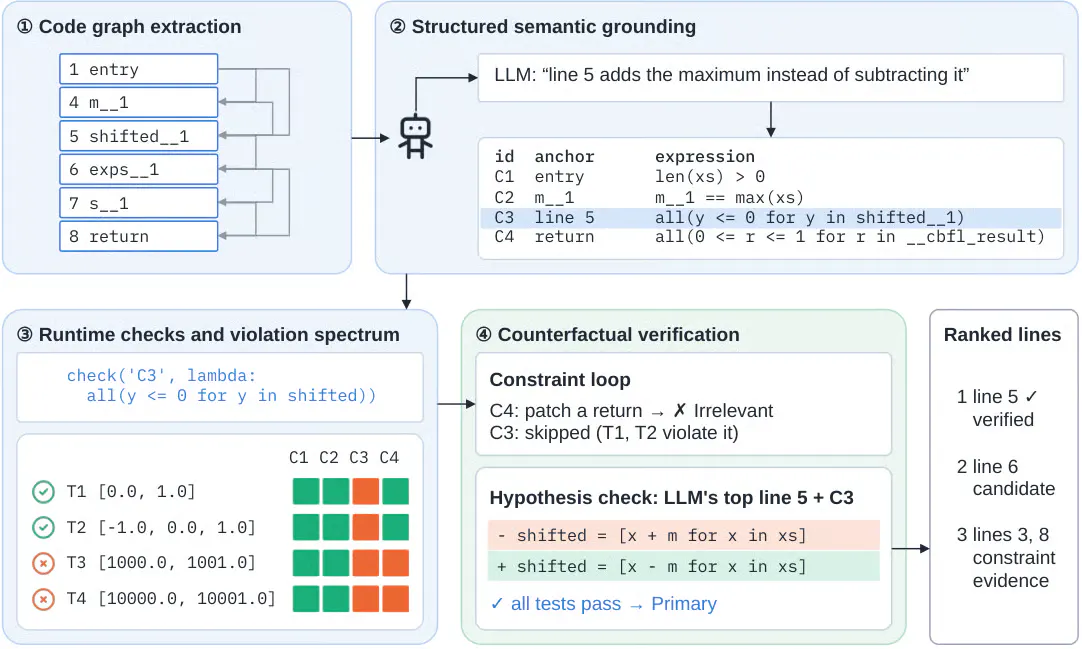
UC Riverside's SemLoc Beats Classic Bug Finders by 36 Points Using LLMs
SemLoc turns LLM program reasoning into runtime-checkable constraints, boosting Python fault localization Top-1 accuracy from 6.4% to 42.8% over spectrum baselines.
A focused feed of models, agents, research and open-source releases for people building with AI.
SemLoc turns LLM program reasoning into runtime-checkable constraints, boosting Python fault localization Top-1 accuracy from 6.4% to 42.8% over spectrum baselines.

A Carnegie Mellon and Browser Use benchmark of 100 hour-long live-web tasks exposes how far web agents still are from reliable knowledge work.
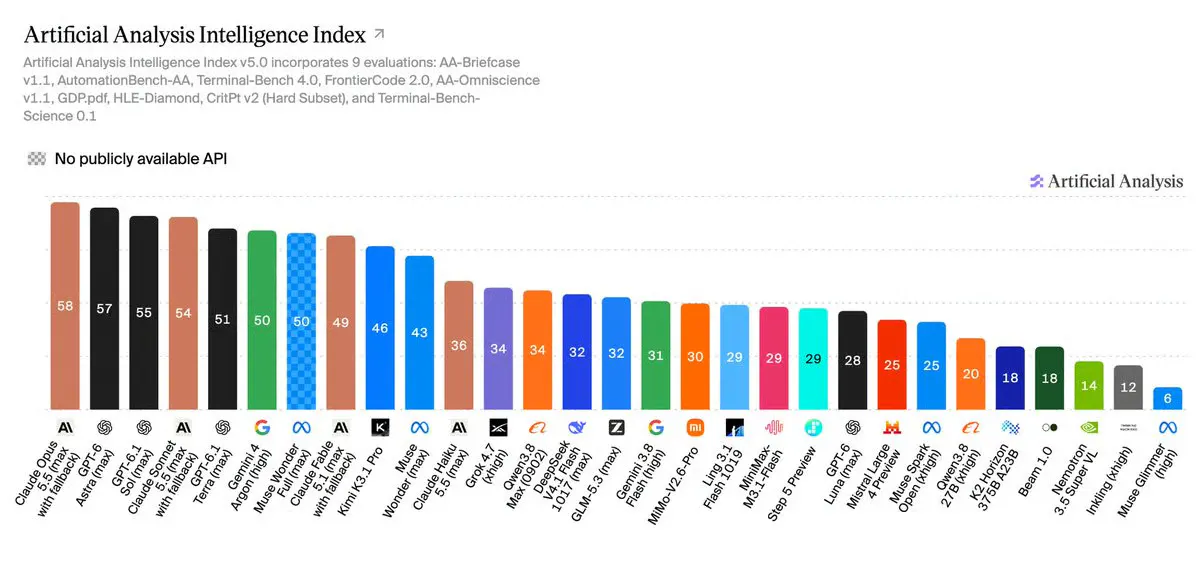
Artificial Analysis rebuilds its flagship benchmark with 60% private tests, two new agentic evals, and a widening open-weights gap.

A new objective-based Self-Organizing Map variant gives every data point its own continuous latent coordinate, cutting cost from O(NM²) to O(NM) while topping 16 benchmarks.

Cartesia's new Managed Agents platform jumps 98 Elo points over its predecessor on blind voice preference tests, with task success climbing to 91.7%.

Vals AI explains how ten Claude agents produced a Lean proof for seven electrons on a sphere, and names which cases should fall next.
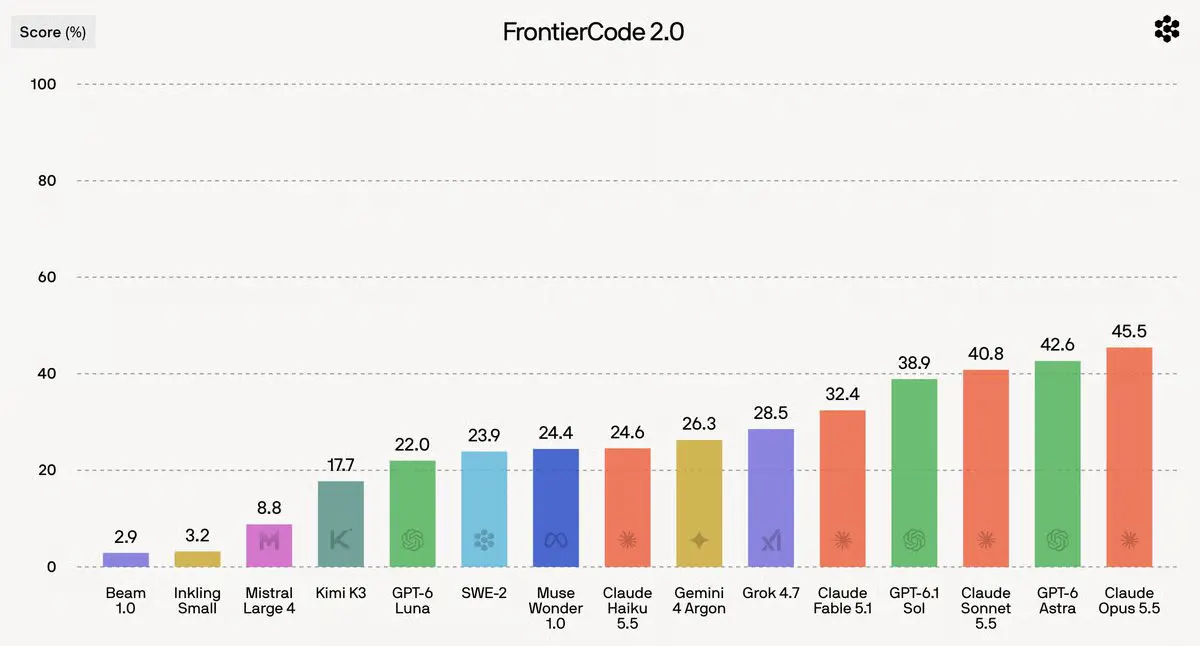
Cognition's new coding benchmark tests whether agents respect unstated constraints, with top model Opus 5.5 scoring just 45% on tasks maintainers built over 40+ hours each.

Fish Audio's new streaming speech-to-text claims the top spot on Cekura's leaderboard with 2.21% WER and conversation-aware turn-taking for voice agents.

Microsoft AI's newest image editing model climbs to #2 on the Artificial Analysis leaderboard, trailing only OpenAI's GPT Image 2.5 Sunburst and leading four categories.
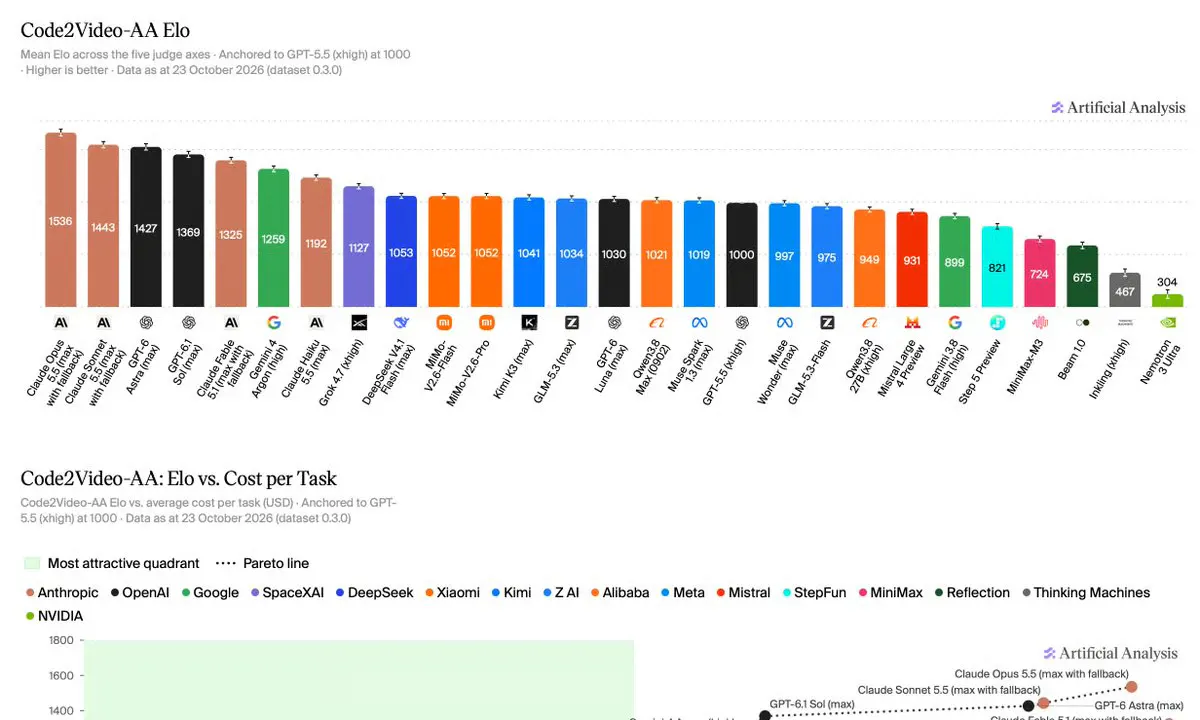
A new benchmark judges 27 models on turning marketing briefs into animated HTML videos, with Claude Opus 5.5 leading at 10x the cost of rivals.

ARC Prize ran NVIDIA's first open vision-language flagship through its reasoning gauntlet, and the numbers reveal where hybrid Mamba-MoE models still trip.
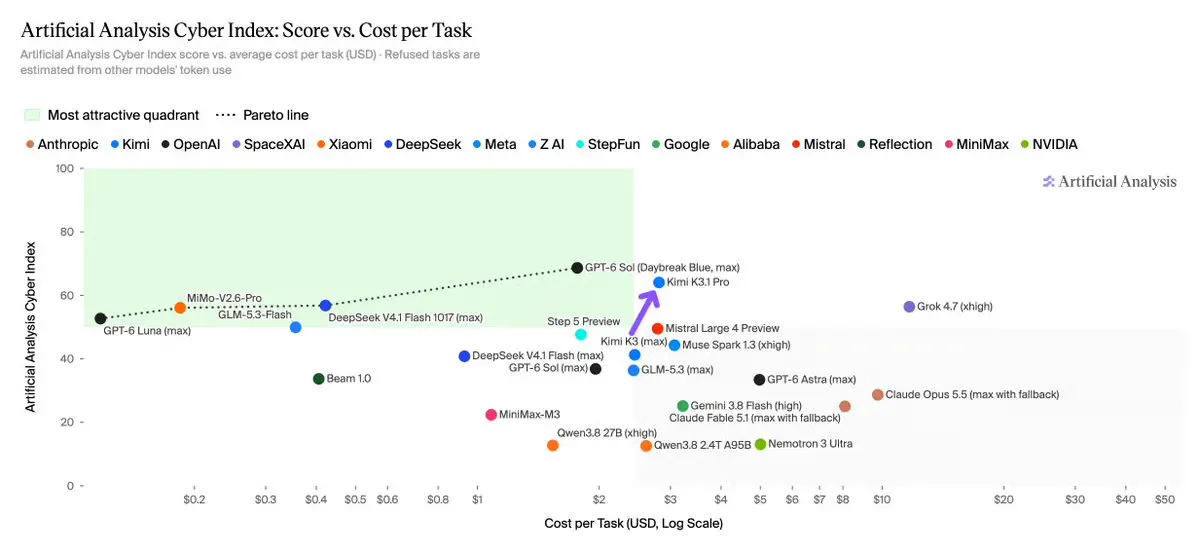
Moonshot's new reasoning model takes the top open spot on Artificial Analysis Cyber Index at 64%, trailing only a trusted-access OpenAI model.

Vals AI's new Inference Provider Index shows the same open-weight model can cost 2.3x more and run 5x slower depending on where you host it.

Epoch AI expanded its benchmark audit program, flagging popular evals like SWE-bench Verified and Humanity's Last Exam as Flawed under a public rubric.

DeepSeek V4.1 Flash 1017 tops the Artificial Analysis Cyber Index among open models, with zero safety refusals and a 53 point jump on CyberGym-E2E-AA.
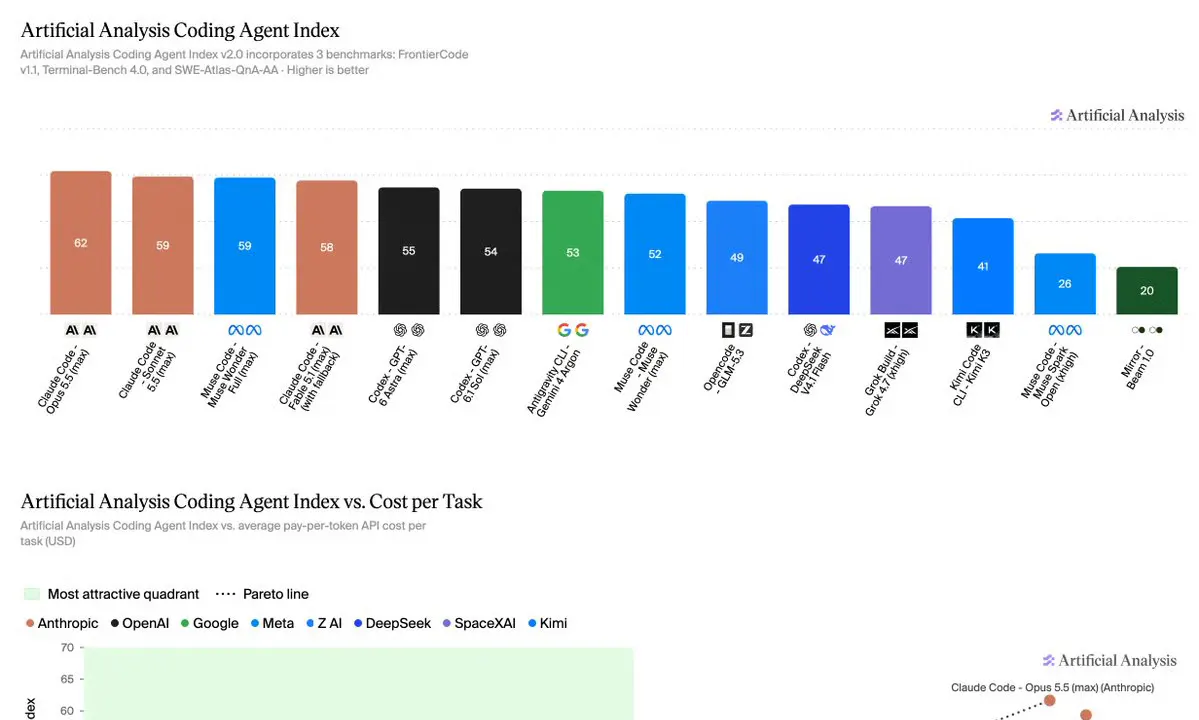
A new coding agent leaderboard swaps in Cognition's FrontierCode benchmark and tightens Q&A grading, reshuffling the top of the charts.

A tiny 86k-parameter causal model estimates which notes are sounding within 50 ms of audio arriving, matching or beating much larger offline systems.

Mistral's first time-series foundation model family runs on CPU, hits #1 on three forecasting benchmarks, and ships under a Modified MIT license.

SubQ Snap 1.1 ties d1-ultra and Elephant 9B atop the Decision Index at a score of 65, winning on hallucination control and context length.

The revised physics research benchmark gives models a code sandbox, and frontier systems have jumped from single-digit to 80%+ accuracy.

A Claude Code fix passed 9 required tests and still returned the wrong title. One closed question after the tests picked the suite that caught it

Tencent and Fudan built 16,700 verifiable training environments from real files across 40 professional domains, lifting a 35B agent's GDPval score by 28 points.
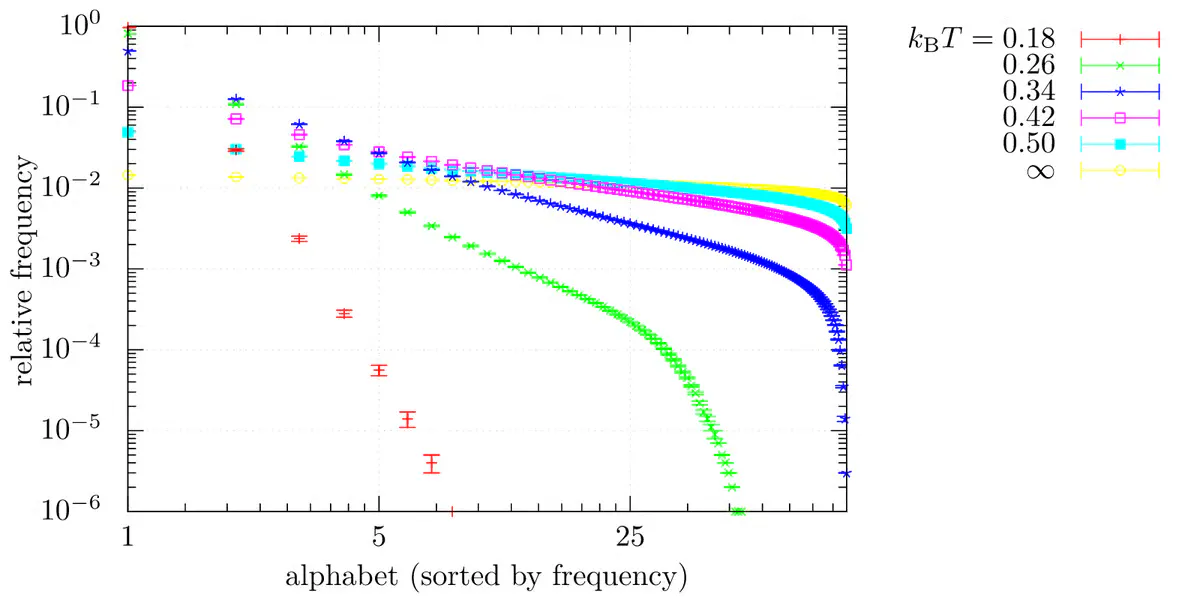
Physicists built a context-sensitive grammar where only nearby symbols interact, and still found a phase transition, hinting that language itself drives the order.

HeyGen's new Turbo text-to-speech model takes the top blind-test ranking at $4 per million characters, undercutting its own predecessor by 7.5x.
No stories match these filters.