
OpenAI Brings Codex and Frontier Models to Google Cloud
OpenAI is placing its frontier models and Codex agent workflows inside Google Cloud's Model Garden, making its biggest search rival a sales channel.
A focused feed of models, agents, research and open-source releases for people building with AI.
OpenAI is placing its frontier models and Codex agent workflows inside Google Cloud's Model Garden, making its biggest search rival a sales channel.
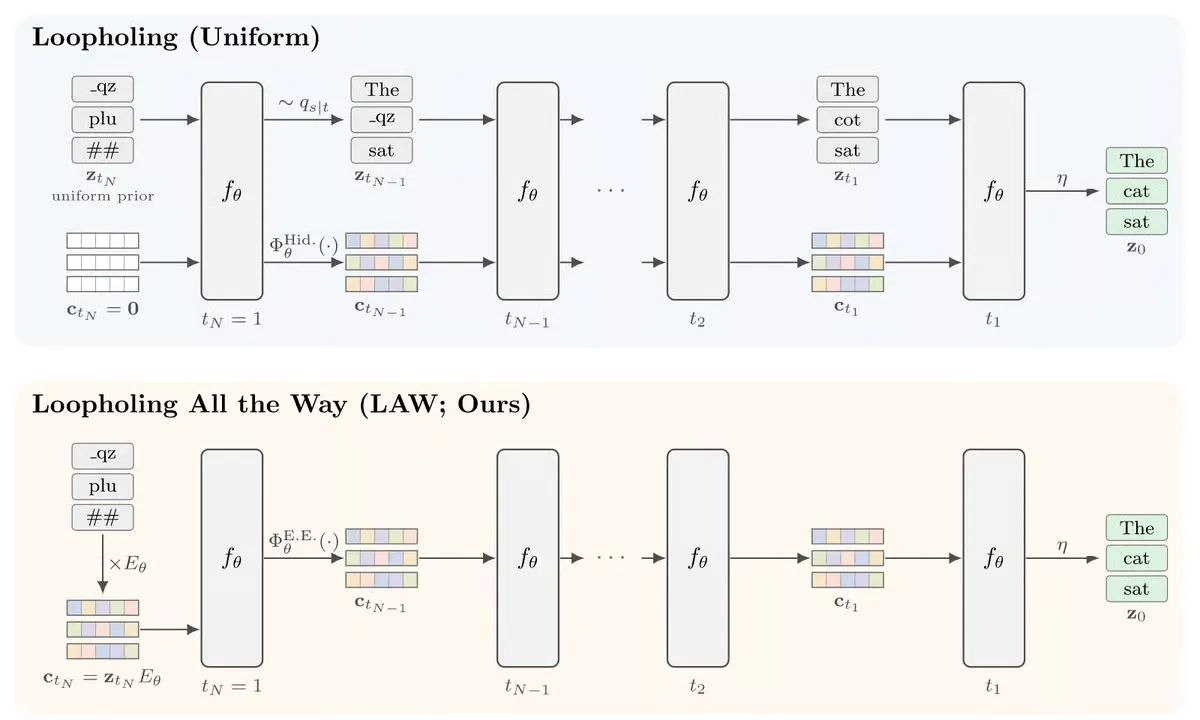
A new continuous language model called LAW ditches discrete token sampling between steps, propagating expected embeddings instead and outperforming diffusion baselines on reasoning tasks.

A refreshed medical record review leaderboard puts Claude Sonnet 5.5 and GPT-6 Astra in a tie, with no model clearing 42%.

NVIDIA unveils open model families spanning language, retrieval, structured data, robotics, biology and quantum, all tuned for European sovereign deployment.

Z.ai's 106B Mixture-of-Experts model activates just 12B parameters per token, trades a sliver of depth for cheaper inference, and ships under MIT.
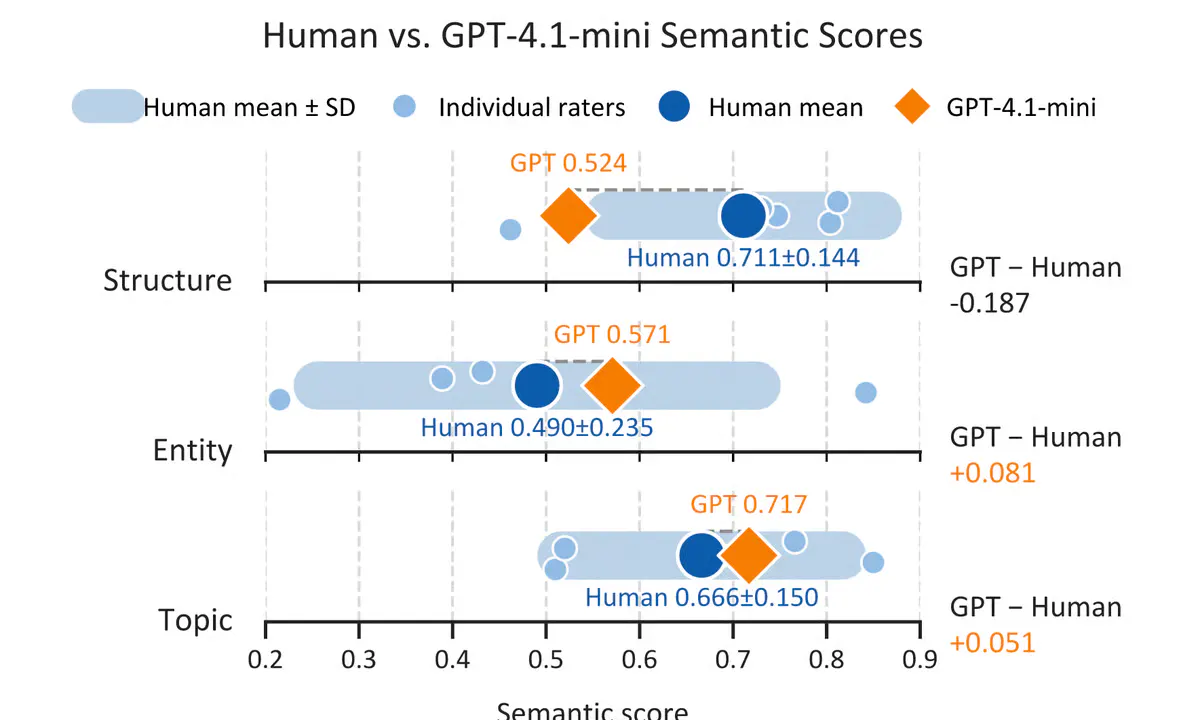
A new framework called Rep2Text shows that a single hidden vector inside an LLM leaks about half the words of its input, raising privacy and interpretability questions.

A new preprint uses psycholinguistics to measure why frontier model outputs feel harder to read, pinning the blame on information-density pressure.

A single adaptive drafter adjusts speculative decoding to batch size and hardware, posting up to 2.99x throughput on vLLM and 3x single-request speedups.

OpenAI folds Orchestra Bio into its Rosalind life sciences stack, pushing AI agents past research into the operational grind of drug programs.

Inception's Mercury 3 is a diffusion-based language model that generates over 1,000 tokens per second while matching frontier speed-tier quality.

Rough concept first, then the words. 10x to 31x faster than strong diffusion models, on 4x to 5x fewer training tokens

Anthropic let an internal Claude model run a 64-hour autonomous protein design campaign, producing 17 lab-validated binders against scorpion neurotoxins from four regions.

Vals AI's new ClaimBench pits 15 models on 1,960 financial claims paired with 10-K excerpts, and small decision models win on cost.

Three US labs shipped open-weights models in a single week, reshaping the Pareto frontier of intelligence versus parameter count.

Kaggle and Rehearsals launched a benchmark testing whether language models can predict real human choices across 1,199 survey tasks grounded in 1,244 US adults.

Vals AI shipped v2.2 of its GDP-weighted agent benchmark, tightening four component tests and reshuffling the frontier model leaderboard.

A new post-hoc calibration method called Truth AnChoring maps raw LLM uncertainty scores to probabilities grounded in actual correctness.

Artificial Analysis launched independent leaderboards for OpenAI's two health conversation benchmarks, surfacing sharp tradeoffs between answer length, cost, and clinical quality.

A 27B fine-tune of Qwen3.8 built for everyday messages beats much larger models at sounding like an actual human being.

Meta's 30B open-weight agentic model runs on a single consumer GPU at 4-bit, beating Gemma4-31B and Qwen3.6-27B on tool use and planning.

Artificial Analysis launched AA-PersonalityBench, scoring 36 models on 30 personality traits, 8 indexes and 21 programmatic communication metrics using judged pairwise comparisons.

Meta's Prometheus supercluster hits 85% goodput and 47K GPU-hour mean time between interruptions across hundreds of thousands of GPUs training Muse Wonder.

A new xLSTM variant corrects one scalar instead of a whole vector per memory update, cutting interference and improving long context performance.

Inception's new diffusion LLM hits 1,068 tokens/sec, beats GPT-6 Luna and Claude Haiku 5.5, and proves scaling laws apply beyond autoregressive models.
No stories match these filters.