

Vals AI's ClaimBench Shows Perplexity's Decider V1.2 Beats Finance Verification at $0.10
Vals AI's new ClaimBench pits 15 models on 1,960 financial claims paired with 10-K excerpts, and small decision models win on cost.
A focused feed of models, agents, research and open-source releases for people building with AI.
Vals AI's new ClaimBench pits 15 models on 1,960 financial claims paired with 10-K excerpts, and small decision models win on cost.

Mistral's new speech stack combines state-of-the-art transcription, expressive TTS, and a LiveKit-based agent SDK with sub-second turn latency.

Bria's new 8B image model ties Qwen-Image-2.1 for the open-weights lead on both text-to-image and editing benchmarks at $32 per 1k images.

A comparison of eleven reward functions reveals how to train LLM agents that respect token, API, and step budgets without an external controller.

Perplexity's agent now runs the model, planner, and tool execution entirely on Apple silicon, keeping private files and credits off the cloud entirely.

Krea 3 lands in the top ranks of image arenas with 2K edits under 8 seconds and $0.06 per image, roughly a third of competitor pricing.

Kindling AI uploaded a preview EXLR8 v2 quantization of Z.ai's 744B GLM-5.3 MoE, tuned for NVIDIA GB10 unified-memory boxes.

Three US labs shipped open-weights models in a single week, reshaping the Pareto frontier of intelligence versus parameter count.

Gradium's Phonon family packs frontier text-to-speech into 31M-40M parameter models that run offline on phones, browsers, and even a Raspberry Pi 5.

Kaggle and Rehearsals launched a benchmark testing whether language models can predict real human choices across 1,199 survey tasks grounded in 1,244 US adults.
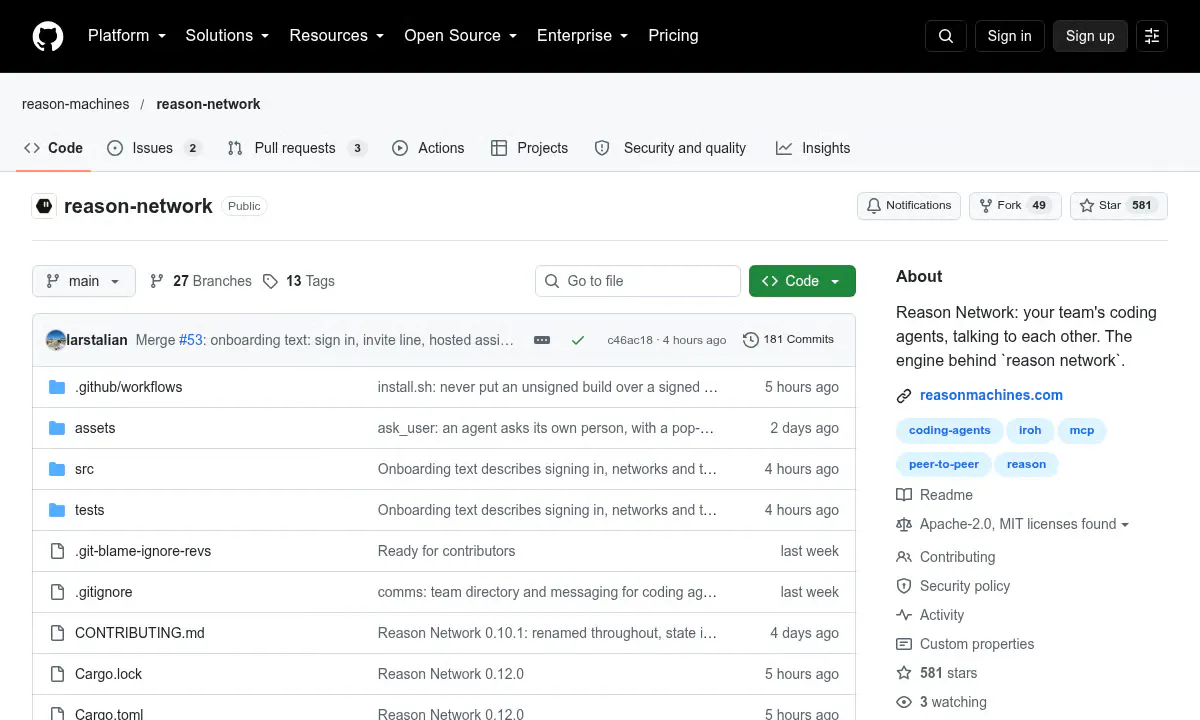
A free, open-source Rust daemon lets coding agents across different machines discover each other, exchange messages, and coordinate directly over an encrypted P2P link.
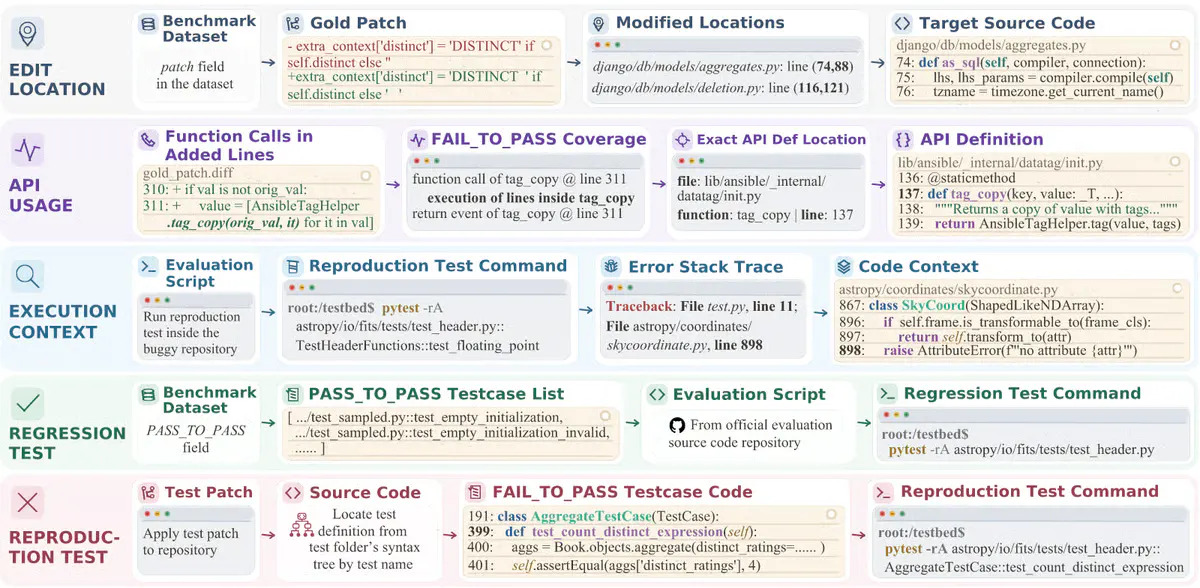
Microsoft and Georgia Tech researchers inject perfect information into SWE agents to rank which signals actually move the needle on bug fixing.

An independent open-source take on Anthropic's internal Scion gives teams a Git-compatible server built for swarms of coding agents landing changes in parallel.

Sakana AI's QD-Rec applies Quality-Diversity evolutionary search to LLM-powered recommendations, growing archives of varied, well-justified picks instead of ranked lists.
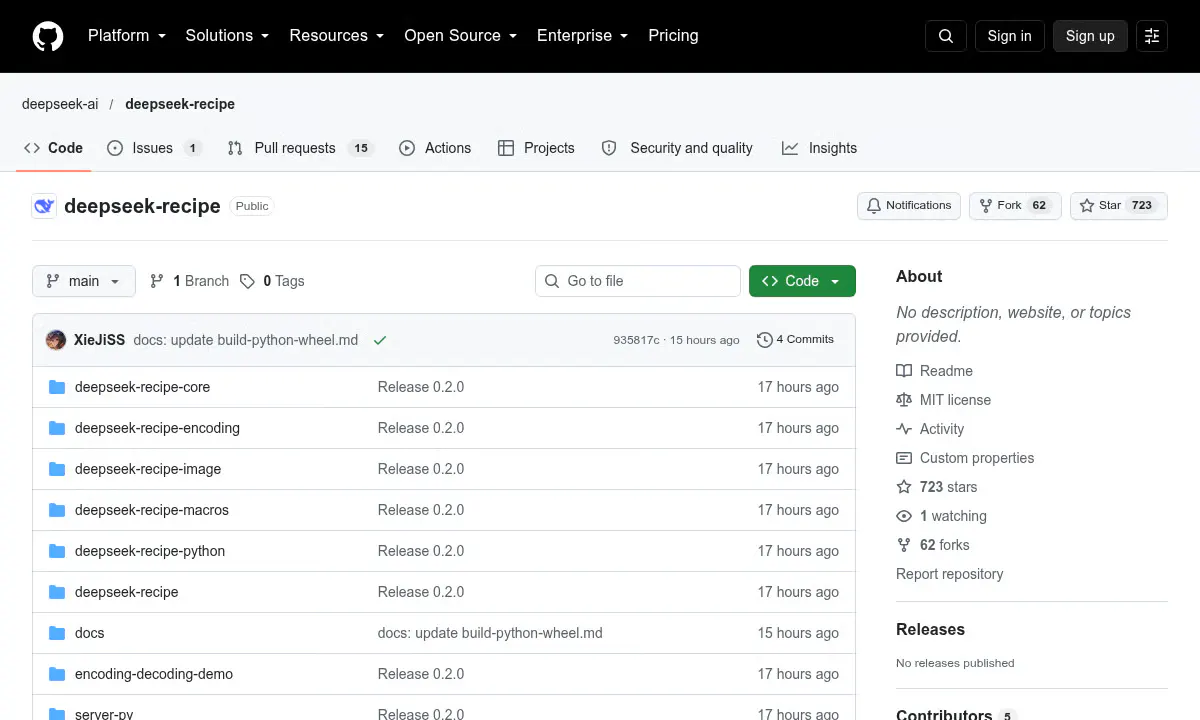
DeepSeek open-sourced DeepInfer and deepseek-recipe, the production stack powering DeepSeek-V4.1-Flash, bringing their internal serving optimizations and API parity to anyone.

A preliminary Vals AI test shows an open-weight DeepSeek model outperforming OpenAI's gated cyber tier on a multi-step network attack scenario at a fraction of the cost.

A new framework retrieves full scientific papers by decomposing them into aspect-specific queries and iteratively expanding the search as a tree.

An 8-step distilled MiniMax H3 that turns image, video, and voice references into clips with synced audio now runs natively in ComfyUI.

Vals AI shipped v2.2 of its GDP-weighted agent benchmark, tightening four component tests and reshuffling the frontier model leaderboard.

Ant Group quietly dropped an MIT-licensed 0.5B TTS model that ties Fish Audio for #1 pronunciation accuracy and leads all open weights in voice cloning.

SGLang's new plugin framework lets NVIDIA and AMD ship specialized low-latency kernels, cutting DeepSeek-V4.1-Flash decoder time by up to 1.56x.

A new post-hoc calibration method called Truth AnChoring maps raw LLM uncertainty scores to probabilities grounded in actual correctness.

Artificial Analysis launched independent leaderboards for OpenAI's two health conversation benchmarks, surfacing sharp tradeoffs between answer length, cost, and clinical quality.
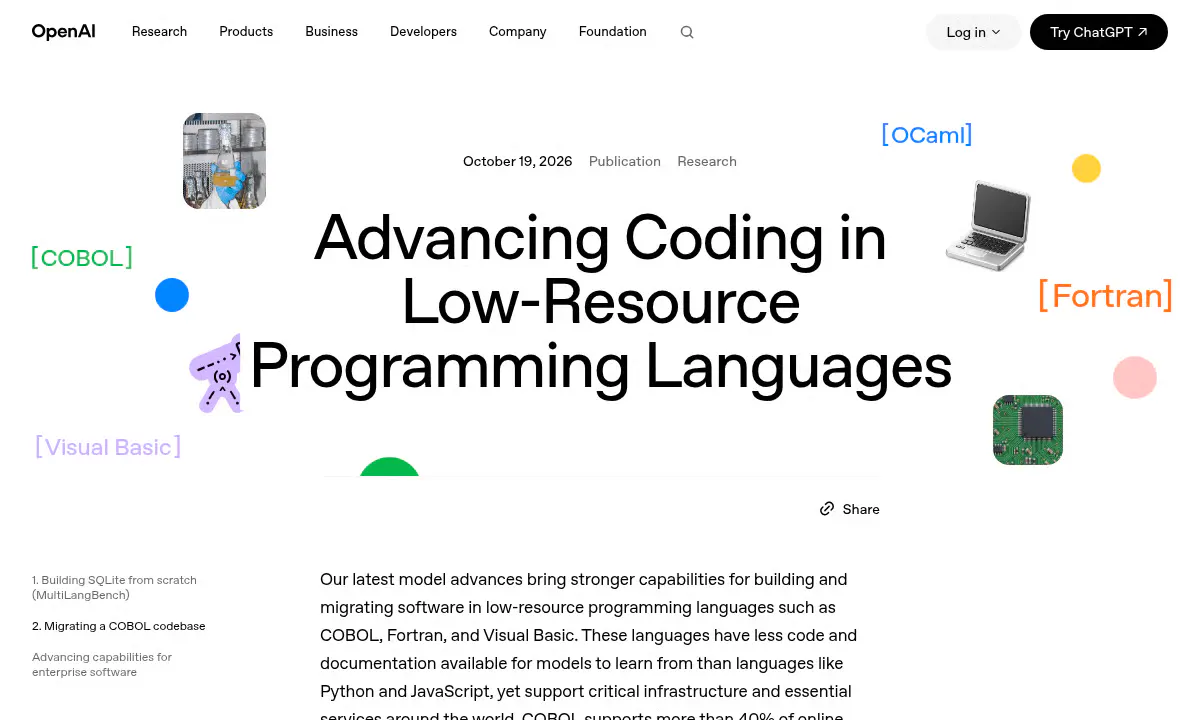
OpenAI's newest models jump from single-digit to near-perfect accuracy on COBOL migration and show massive gains across 20 programming languages.
No stories match these filters.