

Subquadratic's SubQ Snap 1.1 Ties for Top AI Decision Model With 384K Context
SubQ Snap 1.1 ties d1-ultra and Elephant 9B atop the Decision Index at a score of 65, winning on hallucination control and context length.
A focused feed of models, agents, research and open-source releases for people building with AI.
SubQ Snap 1.1 ties d1-ultra and Elephant 9B atop the Decision Index at a score of 65, winning on hallucination control and context length.

The revised physics research benchmark gives models a code sandbox, and frontier systems have jumped from single-digit to 80%+ accuracy.

A Claude Code fix passed 9 required tests and still returned the wrong title. One closed question after the tests picked the suite that caught it

Tencent and Fudan built 16,700 verifiable training environments from real files across 40 professional domains, lifting a 35B agent's GDPval score by 28 points.
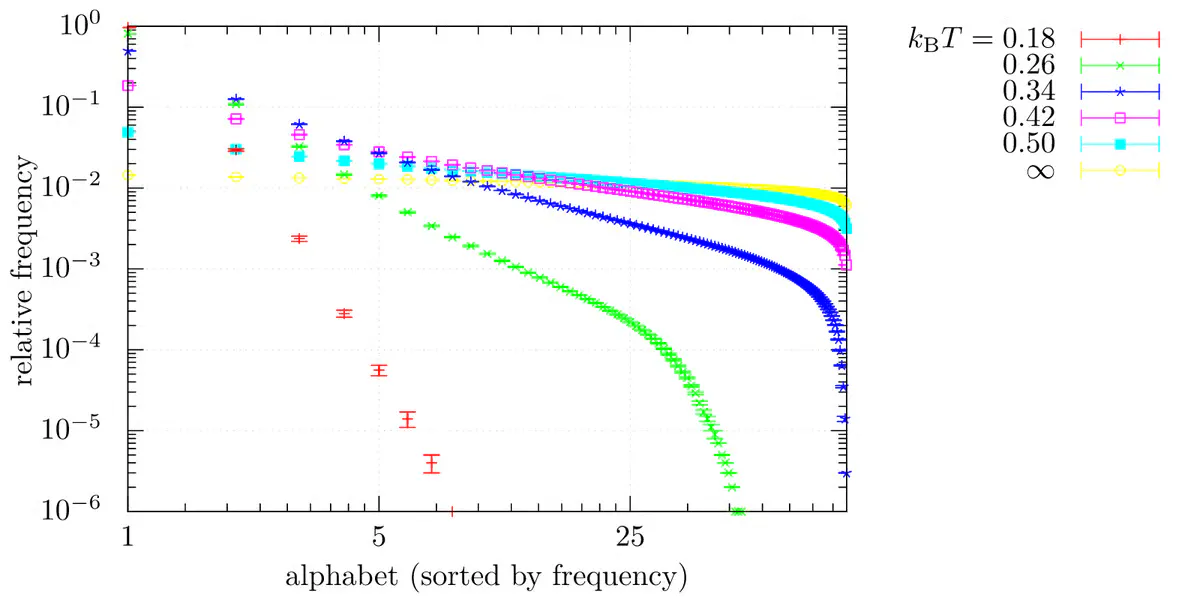
Physicists built a context-sensitive grammar where only nearby symbols interact, and still found a phase transition, hinting that language itself drives the order.

HeyGen's new Turbo text-to-speech model takes the top blind-test ranking at $4 per million characters, undercutting its own predecessor by 7.5x.

Keenable's search API paired with GPT-5.6 Sol takes the top spot on the Vals Web Search Index at 49.1%, leading finance research.
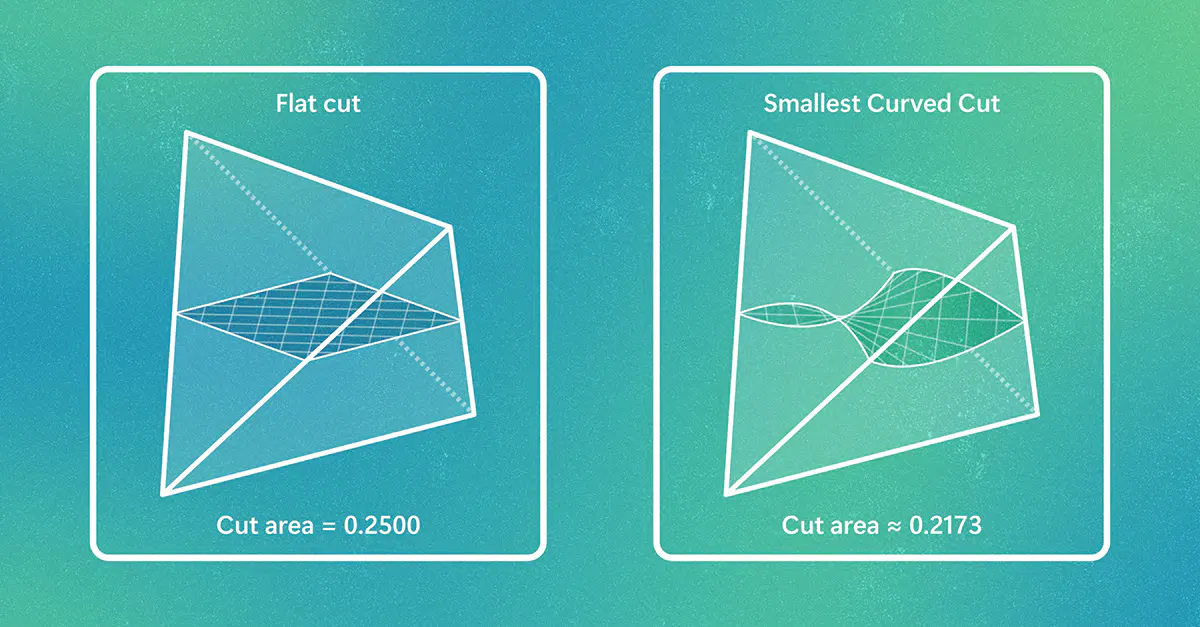
Microsoft researchers used human-directed AI agents to prove a 31-year-old geometry conjecture at the heart of randomized sampling algorithms.
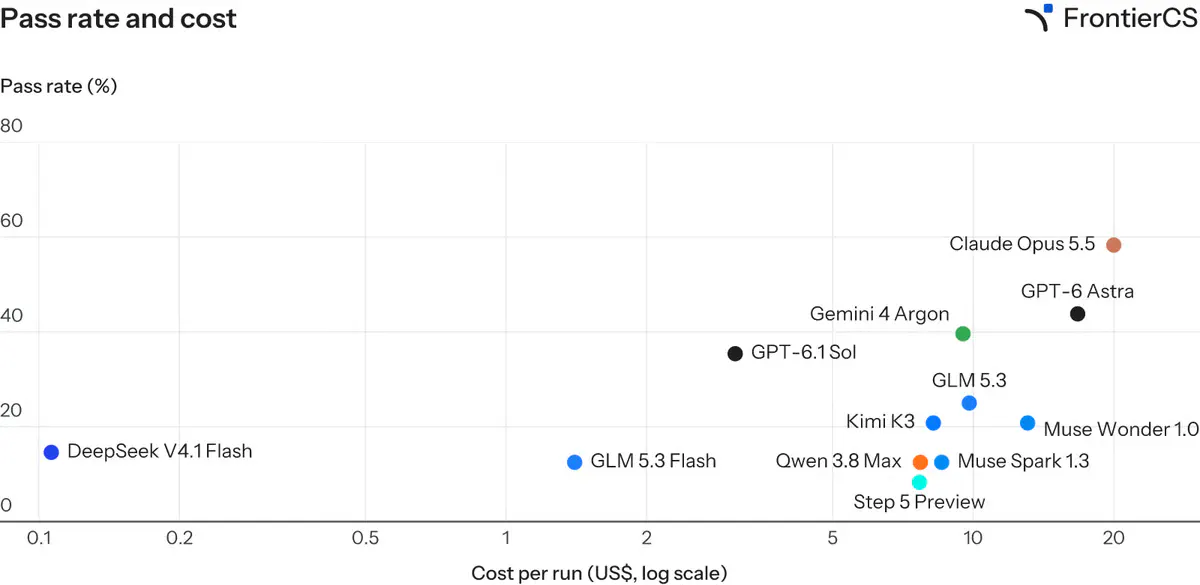
A new benchmark strips the key contribution from 48 research papers and asks AI agents to rebuild it well enough to beat the authors' own code.

A refreshed medical record review leaderboard puts Claude Sonnet 5.5 and GPT-6 Astra in a tie, with no model clearing 42%.
Mistral and NVIDIA are teaming up to accelerate physics simulation, publish open benchmarks for CAE and EDA, and validate agentic AI on real engineering tasks.

Zed benchmarked 25 MCP tool search methods across 150 queries and 536 tools, then shipped weighted BM25 with normalization rules, running fully local.

Vals AI's new ClaimBench pits 15 models on 1,960 financial claims paired with 10-K excerpts, and small decision models win on cost.

Krea 3 lands in the top ranks of image arenas with 2K edits under 8 seconds and $0.06 per image, roughly a third of competitor pricing.

Three US labs shipped open-weights models in a single week, reshaping the Pareto frontier of intelligence versus parameter count.

Kaggle and Rehearsals launched a benchmark testing whether language models can predict real human choices across 1,199 survey tasks grounded in 1,244 US adults.

Sakana AI's QD-Rec applies Quality-Diversity evolutionary search to LLM-powered recommendations, growing archives of varied, well-justified picks instead of ranked lists.

A preliminary Vals AI test shows an open-weight DeepSeek model outperforming OpenAI's gated cyber tier on a multi-step network attack scenario at a fraction of the cost.

A new framework retrieves full scientific papers by decomposing them into aspect-specific queries and iteratively expanding the search as a tree.

Vals AI shipped v2.2 of its GDP-weighted agent benchmark, tightening four component tests and reshuffling the frontier model leaderboard.

Ant Group quietly dropped an MIT-licensed 0.5B TTS model that ties Fish Audio for #1 pronunciation accuracy and leads all open weights in voice cloning.

Artificial Analysis launched independent leaderboards for OpenAI's two health conversation benchmarks, surfacing sharp tradeoffs between answer length, cost, and clinical quality.

Black Forest Labs and fal shipped a post-trained FLUX 3 variant that renders a 10-second clip in 12 seconds, 22x faster than Seedance 2.5 at matched quality.

Artificial Analysis launched AA-PersonalityBench, scoring 36 models on 30 personality traits, 8 indexes and 21 programmatic communication metrics using judged pairwise comparisons.
No stories match these filters.