
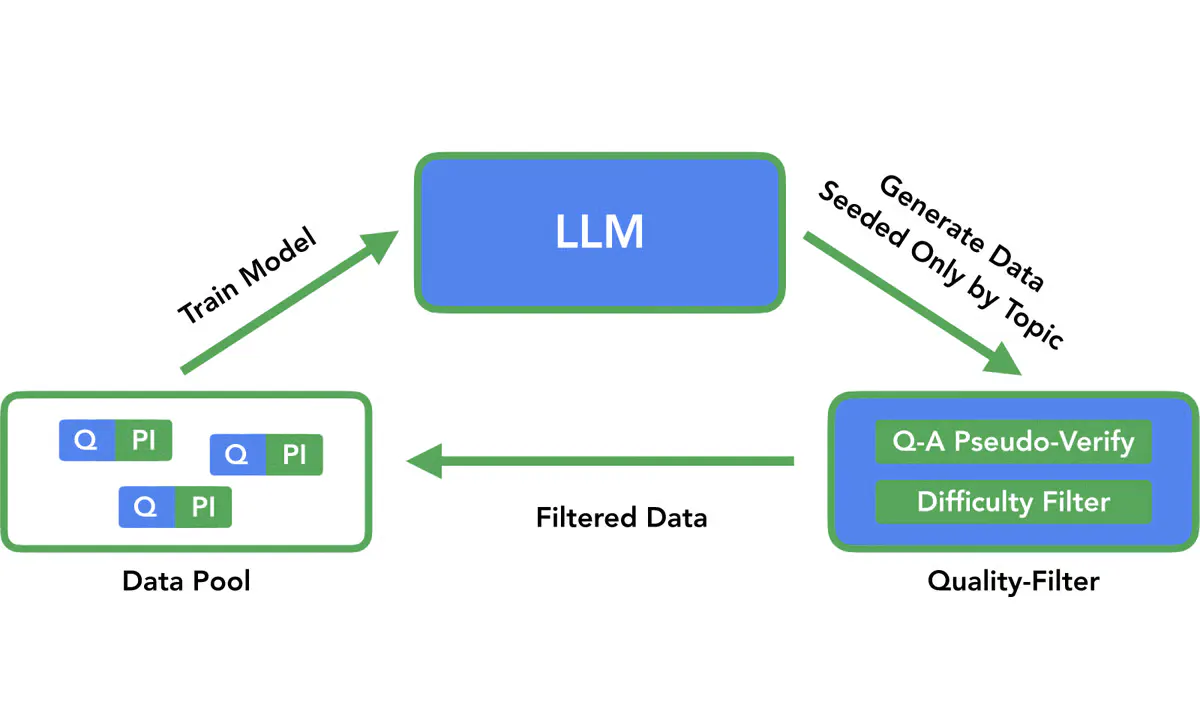
OPST Trains AI Models Using Only Topic Names, No Human Labels
A new self-training framework called OPST lets language models improve themselves using only topic names, with no human-written questions, answers, or reasoning traces.
A focused feed of models, agents, research and open-source releases for people building with AI.
A new self-training framework called OPST lets language models improve themselves using only topic names, with no human-written questions, answers, or reasoning traces.

FMER swaps diffusion for flow matching in online RL, delivering tractable entropy, mirror descent updates, and up to 7x faster training.

Two overlooked floating-point bugs in softmax and cross-entropy have been quietly corrupting gradients. A new paper fixes them in a few lines of JAX.

humans& launches Boba, a text-based assistant that lives in group chats and uses a model trained inside simulated societies.

A community fine-tune of Qwen3.8-27B trades a sliver of raw accuracy for shorter reasoning traces, faster decoding, and cleaner Python output in long agent loops.

New research shows hidden model preferences slip through distillation even when teacher and student share no base model, data, or architecture.

Perplexity and NVIDIA introduce JOLT, a self-distillation post-training method that matches GRPO accuracy on MATH using 6.5x fewer training tokens.
Databricks AI Runtime hits general availability with serverless NVIDIA GPUs, NeMo integration, and day-one support for Nemotron 3.5 models.
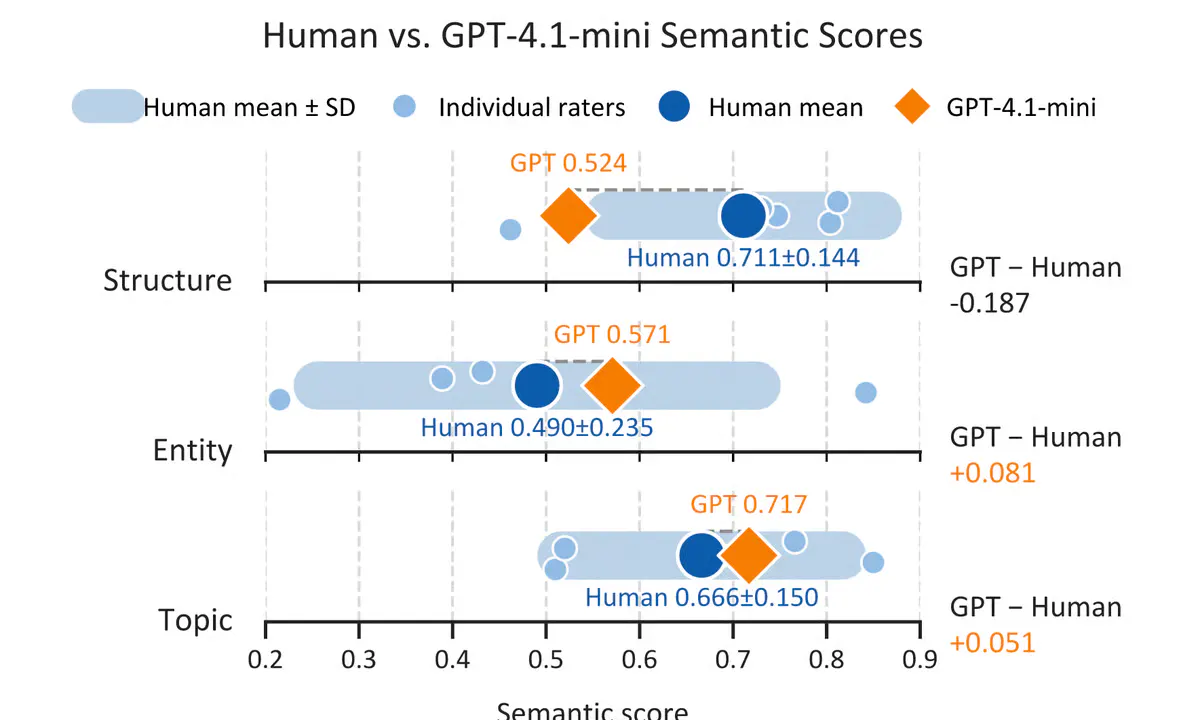
A new framework called Rep2Text shows that a single hidden vector inside an LLM leaks about half the words of its input, raising privacy and interpretability questions.

A new preprint uses psycholinguistics to measure why frontier model outputs feel harder to read, pinning the blame on information-density pressure.

Humans& releases Ampersand v0.1, a 744B collaborator model trained with multi-month simulations and a new off-policy RL algorithm called CORO.

A comparison of eleven reward functions reveals how to train LLM agents that respect token, API, and step budgets without an external controller.

A new post-hoc calibration method called Truth AnChoring maps raw LLM uncertainty scores to probabilities grounded in actual correctness.

Prime Intellect ships a new default RL loss built for async training, plus a 1.15x throughput bump over torchtitan on Qwen3-235B.
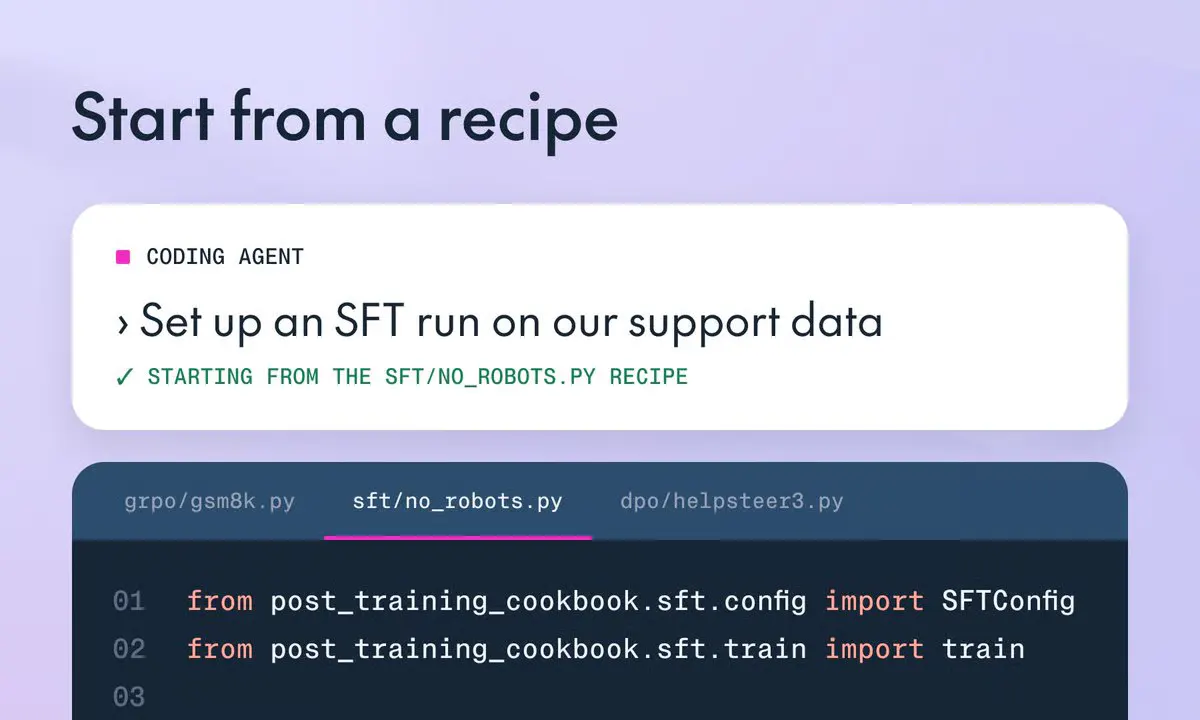
Together AI launched a post-training service that lets you write your own RL or SFT loop in Python while they manage GPU orchestration, rollout engines, and weight sync.
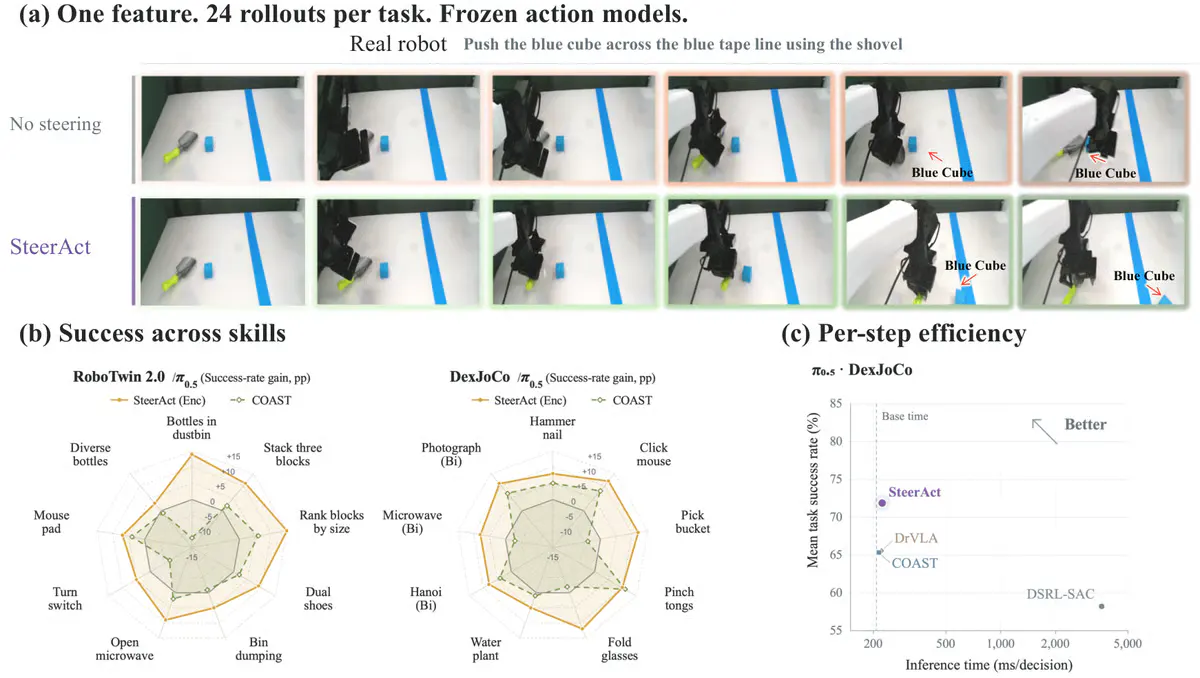
A Stanford, MIT, and Harvard team steers one feature inside frozen robot policies and lifts real-world success rates from 31% to 52%.
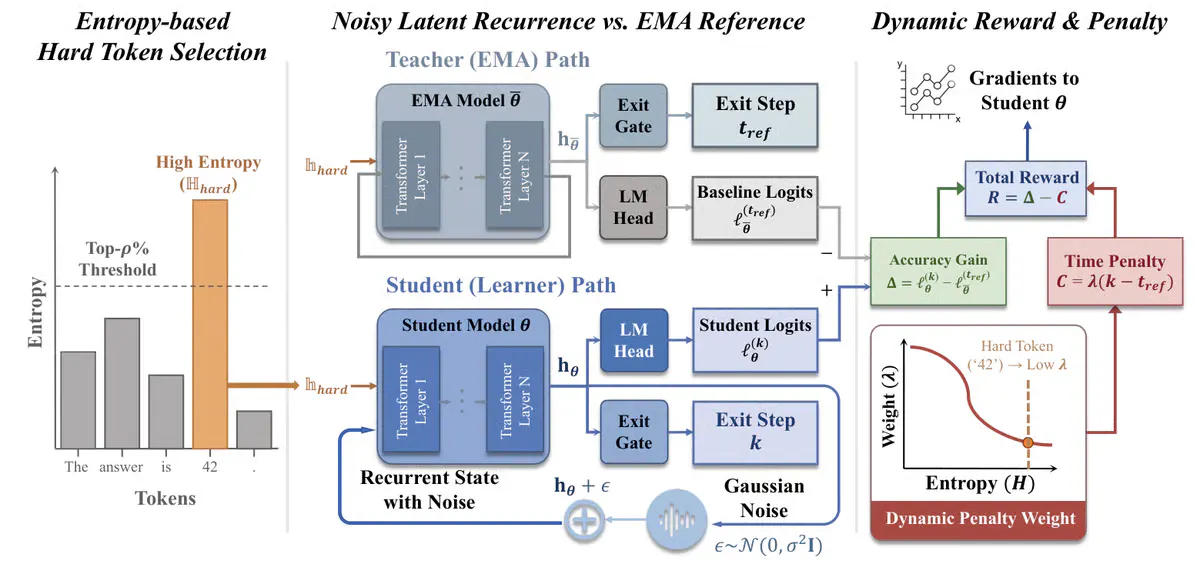
A new reinforcement pre-training recipe pushes rewards into the hidden iterations of looped transformers, improving accuracy and cutting compute per token.

Unsloth's reupload of Meta's 1B instruction-tuned Llama ships GGUF and 4-bit quantizations tuned for 2x faster finetuning with 70% less memory.

A new training recipe called Active Indexing teaches LLMs to cite the documents they learned from, no retriever required at inference time.

Researchers at Tsinghua show that whoever ships an open-source LLM can plant a backdoor that leaks your private fine-tuning queries with only black-box access.
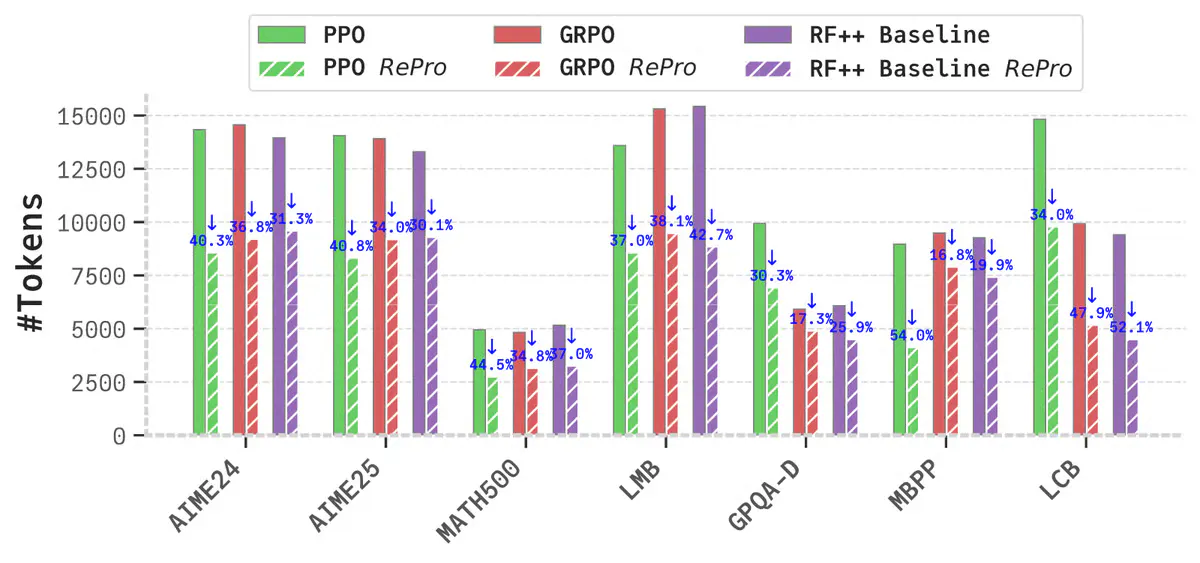
A new reinforcement learning reward treats chain-of-thought as gradient descent, cutting tokens by about 50% while boosting accuracy on math, science, and code benchmarks.
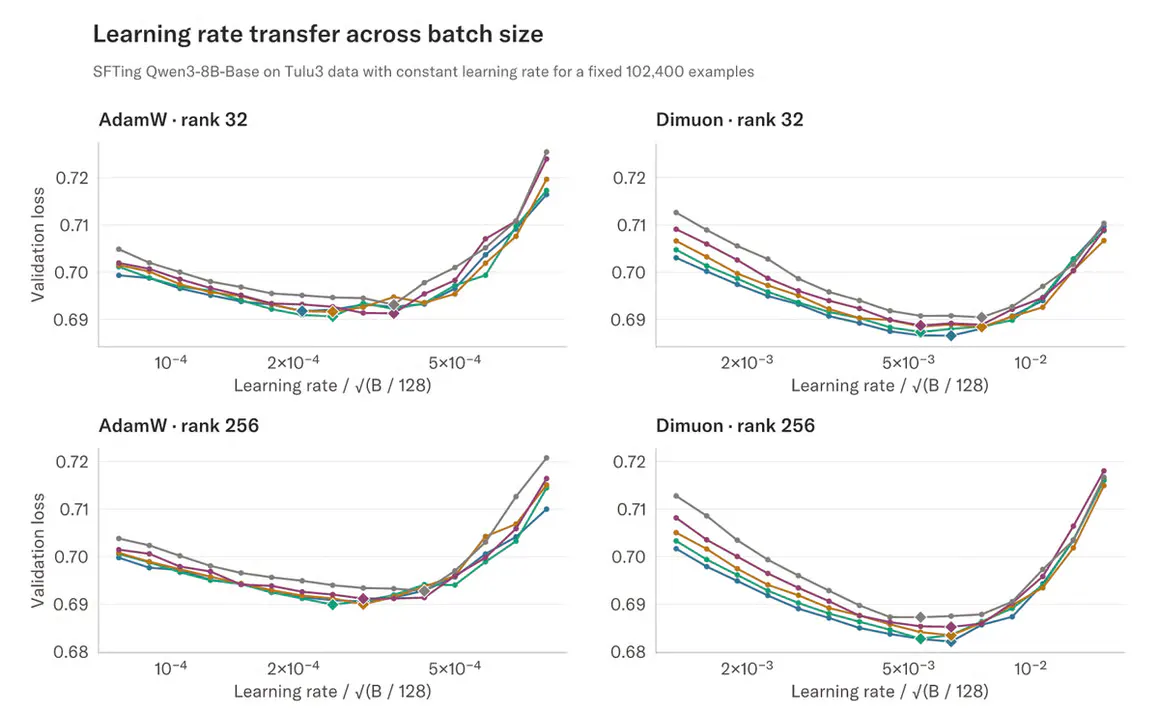
Thinking Machines rolled out Dimuon, a LoRA-specific optimizer that beats AdamW on step count in supervised fine-tuning while leaving RL mostly unchanged.
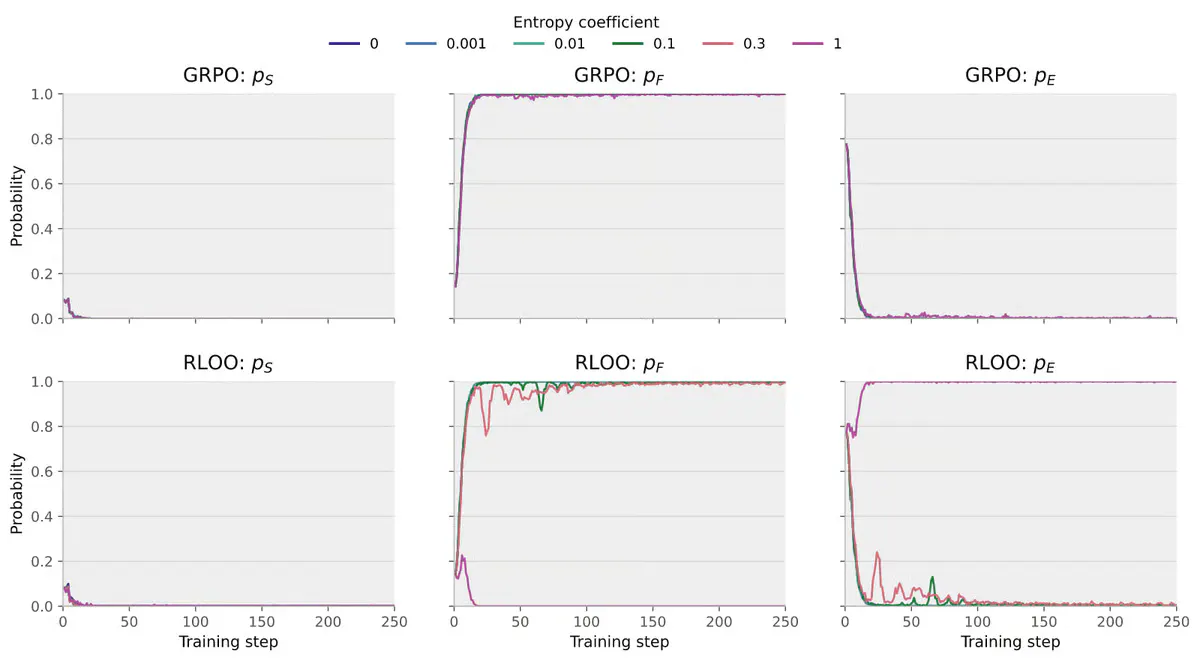
A new RL method called GracefulRL teaches language models to pick a safe fallback instead of guessing when they are likely to fail.
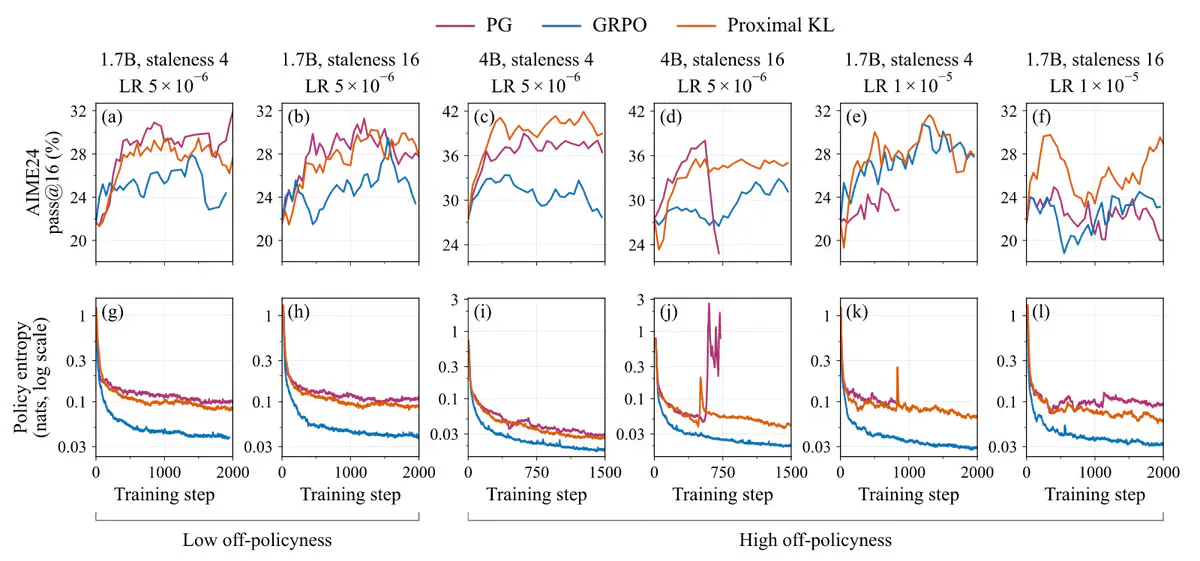
A new RLVR training method called Proximal KL swaps PPO-style clipping for bounded future-KL credit, beating GRPO by up to 2.58% on math benchmarks.
No stories match these filters.